Car Repair Tools
Car Diagnostics for Beginners: OBD2 Scanners and Multimeters
How to read check-engine codes with an OBD2 scanner, what types of scanners exist, what live data tells you, and how to test a car battery and fuses with a multimeter.
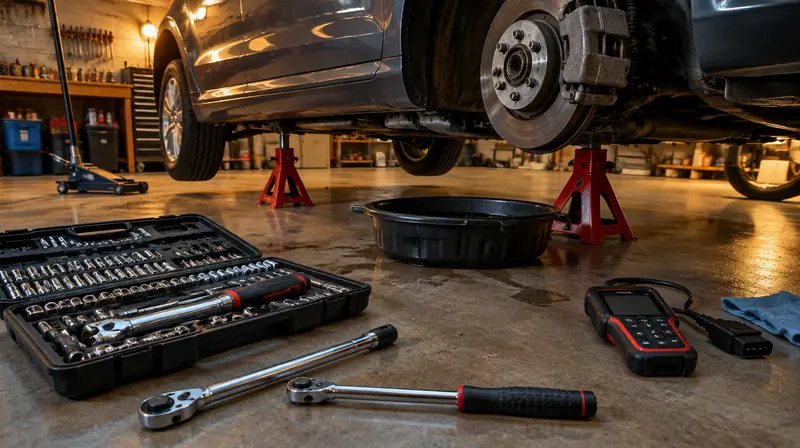
When the check-engine light comes on, it is tempting to panic. But the car is telling you what it has detected, and a simple OBD2 scanner lets you read that information yourself in minutes. Combined with a basic multimeter to check the battery, charging system and fuses, you can diagnose many common problems before visiting a workshop, and you will understand what the mechanic tells you.
Quick answer
- OBD2 (OBD-II / EOBD) is standard on cars sold in the US since 1996 and in the EU since 2001 (petrol) and 2004 (diesel).
- A basic code reader or Bluetooth OBD2 adapter + app reads and clears engine codes and shows live data.
- More advanced scanners read ABS, airbag and transmission modules and perform service functions.
- A multimeter tests battery voltage, alternator charging and fuses.
What is OBD2?
On-Board Diagnostics II is a standard system that monitors engine and emissions components. When it detects a fault, it stores a Diagnostic Trouble Code (DTC) and may turn on the check-engine light (MIL). The 16-pin OBD2 port is usually under the dashboard on the driver's side, within about 60 cm of the steering wheel.
Types of scanners
| Type | What it does | Good for |
|---|---|---|
| Basic code reader | Reads and clears generic engine codes | Occasional check-engine light |
| Bluetooth/Wi-Fi adapter + app | Codes, live data, graphs on your phone; features depend on app | Budget-friendly and flexible |
| Handheld scanner with live data | Codes, freeze frame, readiness monitors, live sensor data | Keen DIYers |
| Multi-system / bidirectional scan tool | ABS, SRS, transmission, body modules; service resets, component tests | Advanced DIY, brakes, battery registration |
Some functions, such as electronic parking brake service mode or battery registration on certain cars, need a more capable tool. Check compatibility with your make and model.
Understanding trouble codes
Codes look like P0301:
- First letter: P powertrain, B body, C chassis, U network.
- 0 = generic (standard) code; 1 = manufacturer-specific.
- Remaining digits identify the system and fault (P0301 = cylinder 1 misfire detected).
A code tells you what the computer detected, not necessarily which part has failed. For example, a lean code (P0171) could be a vacuum leak, a dirty sensor or low fuel pressure. Research the code for your specific car before buying parts.
How to read codes
- Turn the ignition off and plug the scanner into the OBD2 port.
- Turn the ignition on (engine off, or running if the tool asks).
- Select "Read codes". Note all codes and the freeze frame data (conditions when the fault occurred).
- Check readiness monitors if you are preparing for an emissions inspection.
- Research and fix the cause. Only then clear the codes, and confirm they do not return.
A flashing check-engine light usually indicates a severe misfire that can damage the catalytic converter. Reduce load and have the car checked promptly.
Useful live data
- Coolant temperature: is the engine reaching normal temperature?
- Short- and long-term fuel trims: signs of vacuum leaks or fuel problems.
- O2 sensor readings, MAF airflow, RPM, battery voltage.
Using a multimeter on a car
A basic digital multimeter is inexpensive and invaluable. Learn the basics in how to use a multimeter.
Battery and charging test
| Test | Typical healthy reading (12V lead-acid) |
|---|---|
| Engine off, rested for a few hours | About 12.6 V (fully charged); 12.2–12.4 V partly charged; below 12.0 V discharged |
| Engine running (charging) | About 13.8–14.7 V (some smart charging systems vary) |
| While cranking | Should not drop below about 9.6–10 V |
Checking fuses
Set the meter to continuity (beep) mode with the fuse removed. A good fuse beeps. You can also check both test points on top of a fuse in place with the circuit powered: voltage on both sides means the fuse is intact.
Frequently asked questions
Will clearing the code fix the problem?
No. It only turns off the light. If the fault remains, the code will return, and clearing codes also resets readiness monitors needed for inspections.
Is a cheap Bluetooth OBD2 adapter safe?
Reputable adapters are fine. Unplug them when not in use to avoid battery drain, and avoid unknown apps that ask for unnecessary permissions.
This guide is general information, not professional advice. Always read your tool's manual, use the right protective equipment and follow local building and electrical codes. See our disclaimer.