Car Repair Tools
Car Battery Chargers and Jump Starters: How to Choose and Use Them
Smart chargers, maintainers and lithium jump starters explained: amps, battery types (AGM, EFB, lithium), how to jump-start safely and how to charge a battery at home.
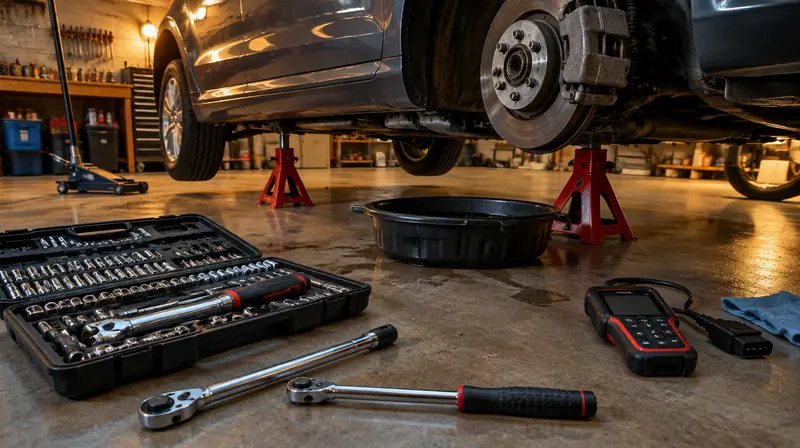
A flat battery is the most common reason cars fail to start, especially in cold weather or after sitting unused. Two tools solve almost every case: a portable jump starter to get going now, and a smart charger to restore and maintain the battery at home. This guide explains how to choose and use both safely.
Quick answer
- Lithium jump starter: sized for your engine (petrol vs diesel, displacement). Keep one in the car and recharge it every 3–6 months.
- Smart charger / maintainer: multi-stage, with modes for your battery type (flooded, EFB, AGM, and lithium if needed). 4–10 A suits most car batteries.
- Always follow the connection order and keep sparks away from the battery.
Jump starters
How they work
A compact lithium battery pack delivers a high burst of current through clamps to crank the engine, without needing a second car. Many also charge phones and include a flashlight.
What to look for
- Engine compatibility: manufacturers usually state the maximum petrol and diesel engine sizes. Diesels and large V8s need more capacity. Peak amp figures are marketing-heavy; the engine rating is more useful.
- Safety features: reverse-polarity protection, spark-proof clamps, short-circuit protection.
- Override / boost mode for very flat batteries (use carefully per instructions).
- Temperature range: lithium packs have reduced performance in severe cold; store in the cabin or keep charged.
How to jump-start with a jump starter
- Switch off the ignition and all accessories.
- Connect the red clamp to the positive (+) terminal.
- Connect the black clamp to an unpainted metal ground point on the engine or chassis (or the negative terminal if the manual allows).
- Turn on the jump starter (if required) and wait for the ready indicator.
- Start the car. Crank for no more than about 5 seconds at a time; wait between attempts.
- Once running, disconnect in reverse order: black clamp first, then red.
- Drive for at least 20–30 minutes or charge the battery properly at home.
Jumper cables (car to car)
- Park the donor car close, without the cars touching. Both ignitions off.
- Red to dead battery (+), red to donor battery (+).
- Black to donor battery (−), black to an unpainted metal ground on the dead car away from the battery.
- Start the donor car, let it run for a few minutes, then start the dead car.
- Remove cables in reverse order.
- Batteries can release explosive hydrogen gas. No smoking or sparks nearby.
- Do not jump-start a frozen, cracked or leaking battery.
- Check your owner's manual: some cars specify remote jump-start terminals and procedures.
- Wear eye protection.
Battery chargers and maintainers
Types
| Type | Use |
|---|---|
| Trickle charger (old style) | Constant low current; can overcharge if left connected. Avoid for long-term use. |
| Smart / multi-stage charger | Analyses and charges in stages, then maintains safely. The right choice for most people. |
| Maintainer (1–2 A) | Keeps stored cars, motorcycles and seasonal vehicles topped up. |
| Charger with engine start | Large workshop units that can assist starting; mostly professional. |
Choosing a smart charger
- Amperage: roughly 10% of battery capacity (Ah) is a gentle charging rate. A 60 Ah battery is well served by 4–8 A.
- Battery type modes: flooded (wet), EFB and AGM (common in start-stop cars), and lithium (LiFePO4) only if the charger supports it.
- Desulphation / repair mode, temperature compensation, power supply mode (for keeping voltage up during diagnostics or battery replacement).
- Weatherproofing and good cable length.
How to charge a battery at home
- Work in a ventilated area. Charger unplugged.
- Connect red to battery (+), black to battery (−) or chassis ground as the charger instructs.
- Select the battery type and mode, then plug in the charger.
- Wait until the charger indicates full/maintenance mode.
- Unplug the charger from the mains first, then remove black, then red.
Start-stop cars and cars with battery monitoring sensors may require battery registration when a new battery is fitted. Check your car's service information.
Frequently asked questions
How long does a car battery last?
Typically 3–6 years, less in hot climates or with lots of short trips.
Can I leave a smart charger connected all winter?
Yes, if it has a maintenance (float) mode designed for long-term connection. Check periodically.
This guide is general information, not professional advice. Always read your tool's manual, use the right protective equipment and follow local building and electrical codes. See our disclaimer.