Car Repair Tools
Portable Tire Inflators and Compressors: How to Choose One
12V, cordless and rechargeable tire inflators compared: speed, duty cycle, accuracy, auto shut-off, and how to check and inflate your tires to the right pressure.
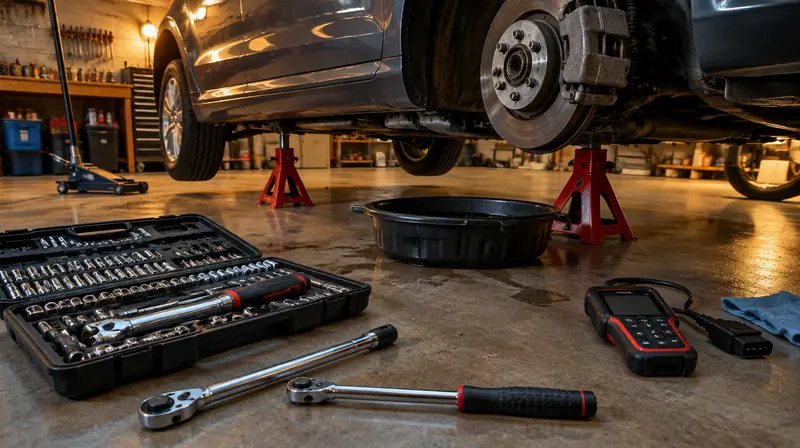
Correct tyre pressure improves safety, braking, fuel economy and tyre life, yet most drivers only check it when a warning light comes on. A portable inflator makes checking and topping up a two-minute job at home, and it is invaluable when a tyre is slowly losing air on the road.
Quick answer
- 12V plug-in inflator: cheap, unlimited runtime from the car; good trunk tool.
- Cordless inflator (tool battery): convenient if you own the platform; great for home use and bikes.
- Rechargeable all-in-one: compact, but limited capacity for full inflations.
- Look for auto shut-off at a preset pressure, a screw-on or lever chuck, and a decent duty cycle.
Types of inflator
| Type | Pros | Cons |
|---|---|---|
| 12V (cigarette socket) | Cheap, works as long as the car is running | Cord length, slower, fuse limits |
| 12V direct-to-battery | More powerful; for SUVs and 4×4 | Needs bonnet open, bulkier |
| Cordless (tool battery) | Portable, fast set-up, multiple modes | Need platform batteries |
| Rechargeable compact | Very small, USB charging | Limited capacity; can overheat |
| Workshop compressor + tyre gun | Fast, accurate with a good gauge | Not portable |
What to look for
- Auto shut-off: set the target pressure and it stops automatically.
- Gauge accuracy: typically ±1 PSI on good models. Verify with a separate quality gauge.
- Inflation speed: time to inflate a typical tyre from 30 to 35 PSI (or from flat). Reviews help here.
- Duty cycle: how long it can run before resting (e.g. 10 minutes on, 10 off). Important for SUV tyres or several tyres.
- Chuck: screw-on or lever-lock; screw-on seals better.
- Accessories: nozzles for balls, bikes (Presta adapter) and inflatables.
- Units: PSI, bar, kPa selectable.
Finding the right pressure
Use the pressure on the placard inside the driver's door jamb, fuel filler flap or owner's manual, not the maximum pressure printed on the tyre sidewall. Pressures may differ for front and rear, and for fully loaded vehicles.
How to check and inflate tyres
- Check when tyres are cold (driven less than a couple of kilometres, or parked for 3 hours).
- Remove the valve cap and press a quality gauge firmly onto the valve.
- Connect the inflator chuck, set the target pressure and start it.
- When it stops, remove the chuck quickly, re-check with your gauge, and refit the cap.
- Check all four tyres plus the spare.
Check pressures monthly and before long trips. Tyres lose roughly 1 PSI per month naturally, plus about 1 PSI for every 5–6°C (10°F) drop in temperature.
Slow punctures
An inflator can get you to a tyre shop with a slow puncture, but do not drive on a tyre that keeps losing pressure quickly, has sidewall damage, or was driven on flat, as internal damage may not be visible. Have it inspected.
Frequently asked questions
Can a portable inflator fill a completely flat tyre?
Most can, but it takes several minutes and may exceed the duty cycle. Check the tyre for damage before driving.
Are inflator gauges accurate?
Many are within 1–2 PSI, but it is worth checking with a separate quality gauge.
This guide is general information, not professional advice. Always read your tool's manual, use the right protective equipment and follow local building and electrical codes. See our disclaimer.