Home Renovation Tools
Measuring and Layout Tools: Levels, Squares, Tapes and Detectors
The measuring and marking tools that make every renovation accurate: tape measures, spirit and laser levels, squares, chalk lines, stud and wire detectors, and how to check them.
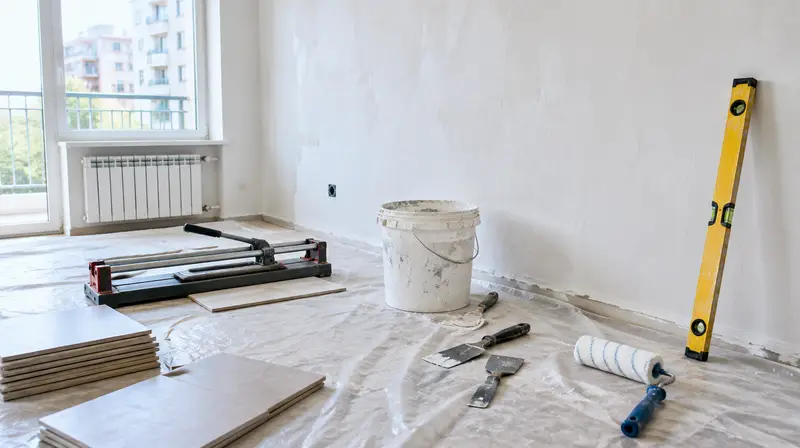
Almost every renovation mistake starts with a measurement: a shelf that is not level, a tile row that drifts, a cabinet that does not fit. Good measuring and layout tools are inexpensive and make every other tool more effective. Here is what to own and how to make sure it is accurate.
Must-have measuring tools
- Tape measure (5–8 m)
- Spirit levels: 60 cm and torpedo; 120 cm for doors and long runs
- Combination square or speed square
- Stud and wire detector
- Pencil and marker; masking tape
- Upgrade: cross-line laser level and laser distance meter
Tape measures and rules
- Tape measure: 5 m for general use; 8 m for rooms. A wide blade stays rigid over longer spans.
- Folding rule: rigid, useful for inside measurements and marking.
- Steel ruler (300 mm / 12 in): precise marking and a straightedge for cutting.
- Laser distance meter for rooms and areas. See laser tools.
Levels
| Level | Best for |
|---|---|
| Torpedo (20–25 cm) | Tight spaces, pipes, small shelves; often magnetic |
| 60 cm (24 in) | Shelves, pictures, cabinets: the all-rounder |
| 120 cm (48 in) and longer | Doors, frames, stud walls, long worktops |
| Straightedge (aluminium) | Checking flatness of walls and floors |
| Cross-line laser | Room-wide level and plumb lines |
| Water level / hose level | Transferring levels around corners (old-school, very accurate) |
How to check a spirit level
- Place the level on a flat surface and draw a line along its bottom edge. Note the bubble position.
- Turn the level end-for-end and place it on the same line.
- The bubble should read exactly the same. If not, the level is out and should be adjusted (if adjustable) or replaced.
- For the plumb vial, do the same against a vertical line on a wall.
Squares
- Combination square: 90° and 45°, depth gauge and marking gauge. Great for woodworking.
- Speed square (rafter square): fast square and angle marking on boards; guide for circular saw cuts.
- Framing square: large L-shaped square for checking corners and layouts.
- Drywall T-square: for cutting boards.
- 3-4-5 rule: to check a large corner is square, measure 3 units along one side and 4 along the other; the diagonal should be exactly 5.
Marking tools
- Carpenter's pencil and fine mechanical pencil.
- Chalk line: snaps long straight lines on floors, walls and boards.
- Marking knife: accurate cut lines in wood.
- Masking tape: marking on tiles and dark surfaces.
- Plumb bob: true vertical reference.
Detectors
- Stud finder: finds timber and metal studs behind drywall.
- Multi-detector: adds AC voltage and metal detection.
- Wall scanner (radar): higher-end devices show rebar, pipes and cables in concrete at greater depth.
Read how to use them correctly in finding hidden wires.
Other useful meters
- Moisture meter: checks wood and walls before painting, flooring or tiling.
- Angle finder / digital protractor: for mitres and stair work.
- Contour gauge: copies shapes of door frames and pipes for flooring cuts.
Frequently asked questions
Is a phone level app accurate enough?
For hanging a picture, maybe. For shelves, cabinets and tiling, use a proper spirit or laser level.
Why is my tape measure hook loose?
It is designed to move by its own thickness so inside and outside measurements are both accurate. Do not tighten it.
This guide is general information, not professional advice. Always read your tool's manual, use the right protective equipment and follow local building and electrical codes. See our disclaimer.