Home Renovation Tools
Essential Hand Tools for Home Renovation (and How to Choose Good Ones)
The hand tools every renovator needs: hammer, screwdrivers, level, tape measure, utility knife, pliers and wrenches, with what separates a good tool from a bad one.
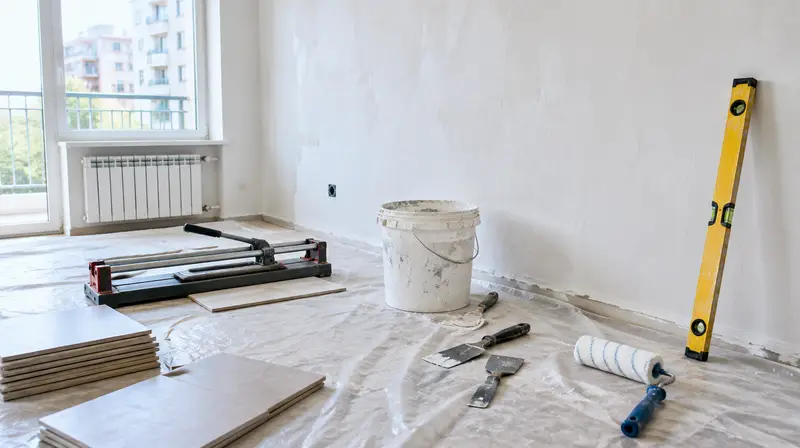
Power tools get the attention, but hand tools do a surprising share of the work in any renovation. A good hammer, a sharp knife, an accurate level and screwdrivers that fit the screw properly make every job easier and neater. This guide goes tool by tool: what to look for, which sizes to buy and the details that separate a tool you will keep for decades from one that fails on day two.
The essential list
- Claw hammer (16 oz / 450 g)
- Screwdrivers: PH1, PH2, PZ1, PZ2, flat 3/5/6.5 mm, plus a stubby
- Tape measure (5–8 m / 16–25 ft)
- Spirit levels: 60 cm (24 in) and a torpedo level
- Utility knife with spare blades
- Pliers: combination, long-nose, side cutters, water pump pliers
- Adjustable wrench and a hex key set
- Putty knife / scraper, pry bar, hand saw
Hammer
A 16 oz (450 g) claw hammer is the standard all-rounder. Look for a curved claw for pulling nails, a smooth face (a milled face is for framing and marks surfaces), and a shock-absorbing handle (fibreglass or steel with rubber grip). A one-piece steel hammer is the most durable. Add a rubber mallet for tapping laminate, tiles and furniture joints without damage.
Screwdrivers
Poorly fitting screwdrivers are the main cause of stripped screws. Buy a good set covering:
| Type | Sizes | Notes |
|---|---|---|
| Phillips (PH) | PH0, PH1, PH2, PH3 | PH2 is the most common |
| Pozidriv (PZ) | PZ1, PZ2, PZ3 | Common in Europe; extra lines on the head |
| Flat (slotted) | 3, 5.5, 6.5, 8 mm | Blade should fill the slot |
| Torx (T / TX) | T10–T30 | Increasingly common in decking and furniture |
| VDE insulated | PH/PZ/flat | Rated 1,000V for electrical work |
Look for hardened tips (often labelled S2 or chrome-vanadium-molybdenum), comfortable two-component handles and a hex bolster for a wrench on stubborn screws. A ratcheting multi-bit driver is a great space-saving addition.
Tape measure
- Length: 5 m (16 ft) for general use, 8 m (25 ft) for rooms and flooring.
- Blade width: 25 mm (1 in) blades extend further without bending ("standout").
- Hook: should slide slightly to compensate for its thickness when measuring inside vs outside dimensions. That slack is normal.
- Markings: clear metric and/or imperial as you prefer; stud markings every 16 in in US tapes.
Spirit levels
A 60 cm (24 in) level is the most versatile. Add a 1.2 m (48 in) level for doors and long runs, and a torpedo level for tight spaces. Look for accuracy of 0.5 mm/m or better, milled edges and solid vials. To check a level: place it on a flat surface, note the bubble, turn it end-for-end in the same place; the bubble should read the same. See measuring and layout tools.
Utility knife
You will use it constantly: opening packaging, scoring plasterboard, trimming carpet and vinyl, cutting sealant and wallpaper. Choose a retractable or snap-off knife with a metal body and blade storage. Change blades often; a blunt blade needs more force and slips.
Pliers
- Combination pliers (180–200 mm): gripping, bending, cutting wire.
- Long-nose pliers: small parts and tight spaces, bending wire loops.
- Side cutters (diagonal cutters): cutting wire and cable ties flush.
- Water pump pliers (tongue-and-groove, 250 mm): plumbing nuts, traps, pipes.
- Locking pliers (vise grips): clamping, removing stripped screws and bolts.
Wrenches and keys
- Adjustable wrench 200–250 mm: tap connections and odd nuts. Pull towards the fixed jaw.
- Hex (Allen) key set: metric (and SAE in the US). Ball-end keys work at an angle.
- Combination spanners 8–19 mm if you work on furniture, bikes or appliances.
Demolition and prep tools
- Pry bar / wrecking bar: removing skirting, trim and old fittings.
- Scrapers and putty knives (25–100 mm): filling, scraping, removing wallpaper.
- Chisels (wood): 12 and 25 mm for hinge recesses and trimming.
- Cold chisel and club hammer: chasing and breaking masonry.
- Hand saw: a fine-tooth pull saw is easy to use and cuts cleanly.
- Hacksaw: metal and plastic pipes, bolts.
Signs of a quality hand tool
- Forged rather than stamped metal parts (pliers, wrenches).
- Tight joints with no wobble in pliers.
- Well-finished tips that fit screws snugly.
- Comfortable handles that do not twist on the shaft.
- A lifetime or long warranty from established brands.
Frequently asked questions
Phillips or Pozidriv: how can I tell?
Pozidriv screws have four extra small lines between the main cross slots. Using a Phillips driver in a Pozidriv screw causes cam-out and damage.
Should I buy a big hand tool set?
A mid-sized set from a reputable brand can be good value. Very large, cheap sets often contain low-quality pliers and screwdrivers.
This guide is general information, not professional advice. Always read your tool's manual, use the right protective equipment and follow local building and electrical codes. See our disclaimer.