Buying Guides
Best Rotary Hammer for Home Use: How to Choose an SDS-Plus for an Apartment
How to choose an SDS-plus rotary hammer for apartment and house renovation: joules, corded vs cordless, 2 vs 3 modes, vibration control, dust extraction and budget tiers.
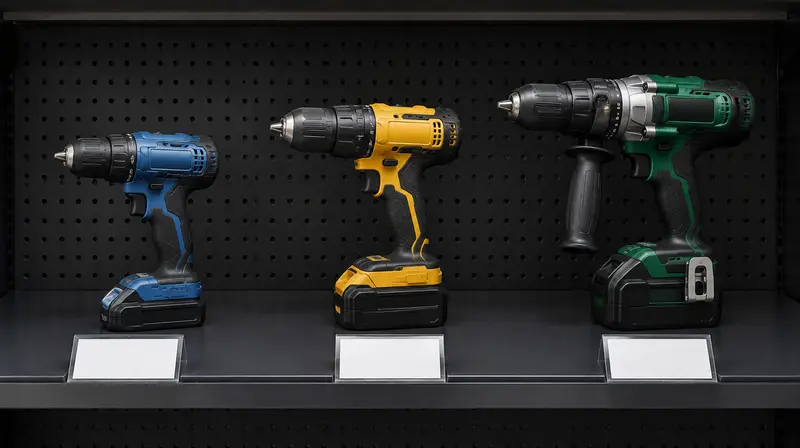
If your walls or ceilings are concrete, a rotary hammer is the single best tool upgrade you can make. But the range is huge: from budget corded models to 36V professional machines. This guide explains how to pick the right one for a home, with realistic expectations at each price level.
Prices are approximate and vary by region. Model names change frequently; use the specs below to evaluate any current tool.
Quick answer
- For most apartments: SDS-plus, 2–3 J impact energy, 2.5–3.5 kg, 3 modes (drill, hammer drill, chisel).
- Corded (~800–900 W) if you plan to remove tiles or chisel a lot; cordless 18V if you mainly drill anchor holes and already own the platform.
- Must-haves: side handle, depth rod, safety clutch; nice-to-haves: anti-vibration, quick-change chuck, dust extraction.
What jobs will you do?
| Job | What you need |
|---|---|
| Anchors 6–10 mm for shelves, curtains, TV mounts | Any SDS-plus, even 1.2–2 J |
| 12–20 mm holes, many holes | 2–3 J, good anti-vibration |
| 68 mm core holes for back boxes | 3 J+, corded preferred; or rent |
| Removing tiles and plaster | 3-mode model with chisel; corded 800 W+ ideal |
| Breaking concrete, heavy demolition | Rent an SDS-max breaker |
Corded vs cordless
Corded
- Lower price for the same power
- Unlimited runtime for chiselling
- Usually 2.5–3.5 J
Cordless 18V
- No cords when moving around rooms or on ladders
- Great for anchor holes
- Uses your existing batteries; needs 4.0 Ah+ for best performance
Features that matter
- Impact energy (J, EPTA): the key performance figure. Be sceptical of figures without a standard.
- Modes: 3 modes add chisel; ensure the chisel position can be rotated and locked.
- Safety clutch / kickback control: essential protection if the bit jams on rebar.
- Anti-vibration (handle damping, counterweights): major comfort difference.
- Quick-change chuck for normal round-shank bits: handy but adds cost.
- Dust extraction: integrated or clip-on dust modules keep ceilings and apartments cleaner.
- Weight and balance: L-shape tools are compact for overhead work; D-handle straight tools are less common in SDS-plus.
Budget tiers
Budget (about $80–150)
Corded 2–3 J from DIY brands or house brands. Fine for occasional use during a renovation. Expect more vibration, less durable chucks and weaker clutches. Good choice if you will use it for one renovation and then occasionally.
Mid-range (about $150–300)
Corded models from the pro lines of mainstream brands, or 18V brushless cordless bare tools. Better vibration control, reliable clutches, longer life. This is the sweet spot for homeowners who drill concrete regularly.
Professional (about $300+)
High-end corded and cordless models with advanced vibration control, dust extraction integration and heavy-duty construction. Worth it for daily use or big renovations.
Product lines to consider across tiers include Bosch (green and Professional), Makita, DeWalt, Milwaukee, Metabo, Hilti (premium) and Einhell, Ryobi and Black+Decker at the budget end.
Don't forget the bits
A quality set of SDS-plus bits (6, 8, 10, 12 mm) matters more than a slightly stronger motor. 4-cutter bits are faster and more resistant to rebar. Add a flat chisel and a tile chisel if you have a 3-mode model.
Frequently asked questions
Is a rotary hammer too much for an apartment?
No. For concrete walls it is the right tool and is actually quieter overall because each hole takes seconds rather than minutes.
Can I buy a cheap one for one renovation?
Yes, a budget corded model often survives a single renovation. Consider reselling or keeping it for occasional use.
This guide is general information, not professional advice. Always read your tool's manual, use the right protective equipment and follow local building and electrical codes. See our disclaimer.