Power Tools Explained
Rotary Hammers (SDS-Plus) Explained: The Right Tool for Concrete
What a rotary hammer is, why it drills concrete so much faster than a hammer drill, SDS-plus vs SDS-max, joules, modes, bits and chisels, and how to use one safely.
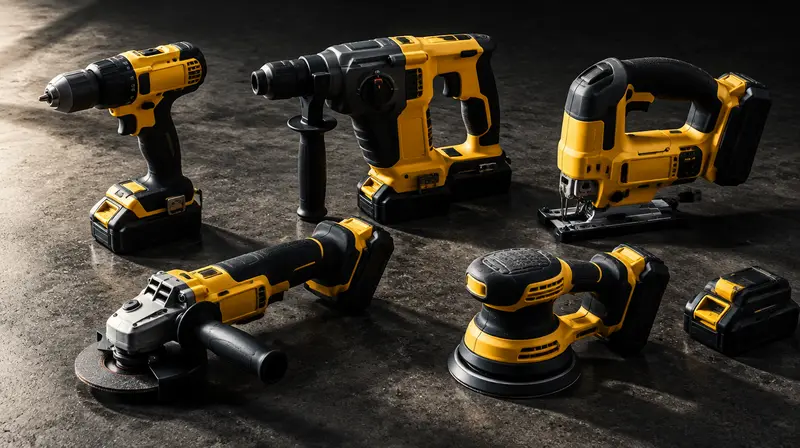
If you live in a concrete building, a rotary hammer is the tool that changes everything. Holes that take minutes of struggle with a combi drill take seconds, and the tool does the work instead of your arms. It can also chisel off old tiles and plaster. This guide explains how it works, what to look for and how to use it.
Quick answer
- A rotary hammer uses a piston mechanism to deliver powerful blows, measured in joules.
- SDS-plus, 2–3 J, is right for homes: anchors, TV mounts, shelves, cable holes and light chiselling.
- Choose a model with 3 modes (drill, hammer drill, chisel) if you plan to remove tiles.
- Use the side handle every time; a jammed bit can twist the tool violently.
Rotary hammer vs hammer drill
A combi or hammer drill makes its hammer action with two ridged discs rubbing against each other. It gives lots of tiny blows and relies on you pushing hard. A rotary hammer uses a motor-driven piston that compresses air to drive a striker onto the back of the bit. The blows are far stronger, and you need only light pressure.
| Combi / hammer drill | Rotary hammer (SDS-plus) | |
|---|---|---|
| Mechanism | Ridged clutch discs | Electro-pneumatic piston |
| Impact | Many weak blows | Fewer, much stronger blows (joules) |
| Concrete 8 mm hole, 50 mm deep | Slow, hard work | A few seconds |
| Chiselling | No | Yes (on 3-mode models) |
| Driving screws | Yes | No (not practical) |
| Bit system | Round/hex shank in chuck | SDS-plus |
Most homeowners in concrete buildings benefit from having both: a drill-driver for screws and wood, and a rotary hammer for masonry.
Types
SDS-plus (light and medium)
1.5–3.5 kg, 1.2–3.5 J. Drill range typically up to 24–28 mm in concrete. Perfect for home renovation, electrical installation and fixing work.
SDS-max (heavy)
5–12 kg, 5–20 J. For large holes, core bits and heavy demolition. Usually rented by homeowners.
Demolition hammers / breakers
Chisel-only tools for breaking concrete and removing screed. Rent these.
Cordless vs corded
18V cordless rotary hammers (around 2 J) are excellent for drilling anchor holes all over the house without cords. Corded models deliver more sustained power for long chiselling sessions. See corded vs cordless.
Key specifications
- Joules are the best measure of drilling speed. Beware: some manufacturers quote measurements to different standards. Compare EPTA-measured figures where possible.
- Anti-vibration systems reduce fatigue and long-term injury risk.
- Safety clutch / kickback control stops rotation if the bit jams.
- Quick-change chuck: some models swap to a keyless chuck for normal round bits.
- Dust extraction attachments are very useful indoors.
Bits and chisels
- SDS-plus drill bits: 2-cutter bits are fine for general use; 4-cutter bits are more robust and less likely to jam on rebar.
- Chisels: pointed (breaking), flat (general), wide tile chisel (removing tiles and plaster).
- Hollow core bits: for electrical back boxes (usually 68 mm).
- Dust-extracting hollow bits connected to a vacuum for clean holes.
If a bit suddenly stops advancing and sparks or makes a metallic noise, you have probably hit steel reinforcement (rebar). Stop, move the hole slightly, or use a rebar-cutting bit. Do not force it.
How to drill a hole in concrete
- Mark the hole, check for cables and pipes, and put on eye, ear and dust protection.
- Clean the bit shank and add a little SDS grease. Push it into the chuck and twist until it locks.
- Fit and tighten the side handle, and set the depth rod.
- Select hammer drill mode.
- Place the tip on the mark and start slowly for a few seconds to create a dimple, then go to full speed.
- Apply light, steady pressure. Let the hammer do the work.
- Pull the bit back occasionally to clear dust. Vacuum or blow out the hole before inserting the anchor.
How to remove tiles with the chisel mode
- Fit a wide tile chisel and select chisel mode.
- Start at a broken tile or edge, holding the chisel at a shallow angle (about 30°).
- Work in short bursts, levering tiles off rather than smashing them.
- Wear goggles, gloves and a respirator. Tile shards are sharp and silica dust is hazardous.
Frequently asked questions
How many joules do I need?
2–3 J handles all typical home drilling (6–12 mm anchors) and light chiselling. More joules are needed only for large holes or heavy demolition.
Can I use normal drill bits in an SDS rotary hammer?
Only with a chuck adapter or a quick-change chuck, and only in rotation-only mode. Never use hammer mode with a normal chuck.
Is a cordless rotary hammer powerful enough?
Yes, for drilling anchor holes and light chiselling. For long chiselling sessions or large holes, a corded model is better value.
This guide is general information, not professional advice. Always read your tool's manual, use the right protective equipment and follow local building and electrical codes. See our disclaimer.