Buying Guides
Drill vs Impact Driver vs Hammer Drill vs Rotary Hammer: Which One Do You Need?
A side-by-side comparison of drill-drivers, impact drivers, combi/hammer drills and rotary hammers: how they work, what each does best and which combination to buy.
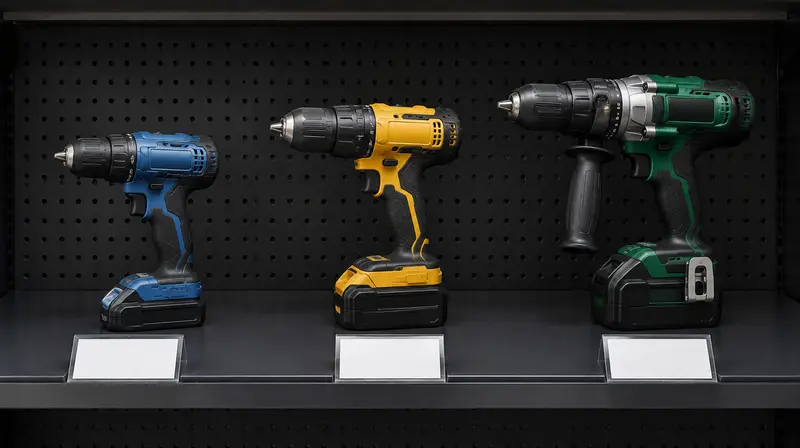
Four tools that look similar, four very different jobs. Beginners often buy the wrong one: an impact driver when they need to drill concrete, or a combi drill for a flat full of concrete walls. This comparison explains how each works and which combination makes sense for your home.
Quick answer
- Drill-driver: holes in wood/metal/plastic + screws with clutch control.
- Impact driver: fast driving of long screws and bolts; not for precise drilling or masonry.
- Combi (hammer) drill: drill-driver + light hammer for brick and block.
- Rotary hammer (SDS-plus): concrete drilling and chiselling; not for screws.
- Most homes: combi drill; add an impact driver for lots of screwing, and a rotary hammer for concrete.
How they work
| Tool | Mechanism | Bit holder |
|---|---|---|
| Drill-driver | Rotation with adjustable clutch | Keyless chuck (round and hex shanks) |
| Impact driver | Rotation + rotational hammer blows when resistance rises | 1/4" hex quick-release |
| Combi / hammer drill | Rotation + axial vibration from ridged discs | Keyless chuck |
| Rotary hammer | Rotation + powerful piston-driven blows | SDS-plus |
Which is best for each job?
| Job | Drill-driver | Impact driver | Combi drill | Rotary hammer |
|---|---|---|---|---|
| Furniture assembly | Best | Too aggressive | Good | No |
| Small holes in wood/metal | Best | OK with hex bits | Best | With adapter |
| Long screws (decking, framing) | OK | Best | OK | No |
| Brick / block holes | No | No | Good | Best |
| Concrete holes | No | No | Slow | Best |
| Hole saws / large bits | Good | No | Good | Core bits |
| Removing tiles | No | No | No | 3-mode models |
| Nuts and bolts | Light | Good (adapter) | Light | No |
Side-by-side specs (typical 18V)
| Drill-driver | Impact driver | Combi drill | Rotary hammer | |
|---|---|---|---|---|
| Torque | 40–100 Nm | 150–250 Nm | 50–150 Nm | n/a (impact 1.2–3.5 J) |
| Weight | 1.2–1.8 kg | 1.0–1.5 kg | 1.5–2.3 kg | 2.5–3.5 kg |
| Noise | Low | High | High in hammer mode | High |
| Precision | High | Medium | High | Medium |
Recommended combinations
- Timber-frame house or plasterboard apartment: drill-driver (or combi) + impact driver.
- Brick house: combi drill; add an impact driver for outdoor projects.
- Concrete apartment: combi drill or drill-driver + SDS-plus rotary hammer.
- Full renovation: all three (drill, impact driver, rotary hammer) on one battery platform.
Frequently asked questions
Can an impact driver replace a drill?
For many screwing jobs, yes. For accurate holes, masonry and delicate screws, you still need a drill.
What is the difference between a hammer drill and a rotary hammer?
A hammer drill uses ridged discs for many light blows; a rotary hammer uses a piston for fewer but far stronger blows and uses SDS bits. The rotary hammer is much faster in concrete.
This guide is general information, not professional advice. Always read your tool's manual, use the right protective equipment and follow local building and electrical codes. See our disclaimer.