Car Repair Tools
DIY or Mechanic? Which Car Jobs You Can Do Yourself
A realistic guide to which car maintenance and repair jobs beginners can do at home, which need experience and tools, and which should always go to a professional.
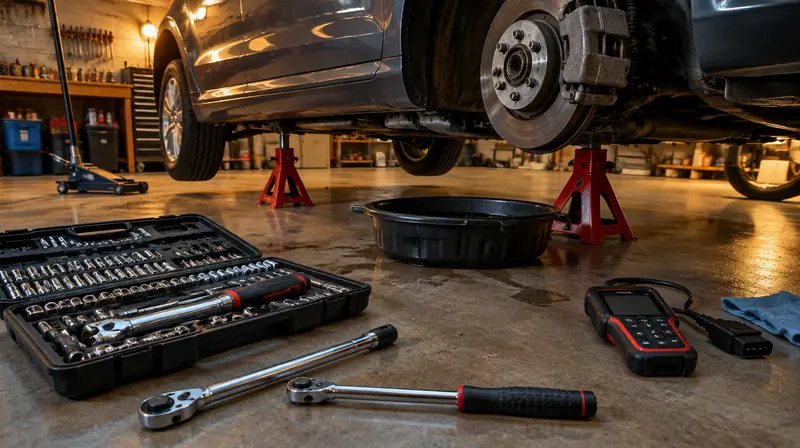
Doing your own car maintenance can save money and is genuinely satisfying. But some jobs need specialised equipment, training, or carry real risk if done wrong. Here is an honest breakdown of what a beginner can tackle, what to leave until you have more experience, and what to always hand to a professional.
Quick guide
- Green (beginner): wipers, fluids, tyre pressures, air and cabin filters, many bulbs, 12V battery on simple cars.
- Amber (with tools and care): oil and filter change, brake pads and discs, spark plugs, wheel swaps, simple sensors.
- Red (professional): airbags, fuel system opening, air conditioning refrigerant, timing belts on complex engines, transmission internals, high-voltage hybrid/EV systems, wheel alignment, structural and welding work.
Green: good first jobs
| Job | Tools | Time |
|---|---|---|
| Wiper blades | None | 5–10 min |
| Check/top up fluids | Funnel, correct fluids | 10 min |
| Tyre pressure | Gauge, inflator | 10 min |
| Engine air filter | Screwdriver or none | 10–15 min |
| Cabin filter | Often none | 10–20 min |
| Accessible bulbs | Gloves, screwdrivers | 10–30 min |
| Reading fault codes | OBD2 scanner | 10 min |
Amber: doable with the right tools and care
| Job | Key requirements |
|---|---|
| Oil and filter change | Ramps or stands, filter wrench, torque wrench, correct oil; proper disposal |
| Brake pads (and discs) | Jack stands, piston tool, torque wrench, careful procedure; test brakes before driving |
| Spark plugs | Spark plug socket, torque wrench; care with aluminium heads |
| Battery replacement | Correct order; registration on some cars |
| Swapping seasonal wheels | Jack, stands, torque wrench |
| Simple sensors (e.g. some O2 sensors) | Special sockets, diagnostics |
For all of these, have a service manual or reliable model-specific guide. If a bolt is seized, a part does not match, or something seems wrong, stop.
Red: leave to professionals
- Airbags and SRS: accidental deployment can cause serious injury.
- High-voltage systems on hybrids and EVs (orange cables): lethal voltages; requires training and insulated equipment.
- Air-conditioning refrigerant: regulated; requires certified equipment and qualifications in many countries.
- Fuel system work involving opening high-pressure lines: fire risk.
- Timing belts and chains on interference engines: a mistake can destroy the engine.
- Brake hydraulic system bleeding with ABS modules, steering components, wheel alignment.
- Structural repairs and welding, suspension springs (compressors are dangerous).
How to decide
- Is it safety-critical? Brakes, steering, suspension and tyres affect everyone on the road. Be honest about your skills.
- Do I have the right tools? Buying specialised tools for one job can cost more than the workshop.
- Is there a warranty or lease requirement? Keep records and receipts for DIY servicing, and use approved parts and fluids.
- What if it goes wrong? If a mistake could leave you stranded or cause expensive damage, get a quote first.
Buy parts yourself and ask a trusted independent garage to fit them, or do the preparation (diagnosis, research) yourself so you can have a better-informed conversation with the mechanic.
Frequently asked questions
Does doing my own oil change void my warranty?
In many regions, using the correct specification oil and filter and keeping receipts and records is enough. Check your warranty terms and local consumer law.
Is it safe to change my own brake pads?
It is a common DIY job, but brakes are safety-critical. Follow a model-specific procedure, torque bolts correctly and bed in the pads. If unsure, have a mechanic check your work.
This guide is general information, not professional advice. Always read your tool's manual, use the right protective equipment and follow local building and electrical codes. See our disclaimer.