Car Repair Tools
Car Jacks and Jack Stands: Why You Never Work Under a Car on a Jack Alone
Types of car jacks (scissor, trolley/floor, bottle), how to choose jack stands, where the lifting points are, and a step-by-step method for raising a car safely.
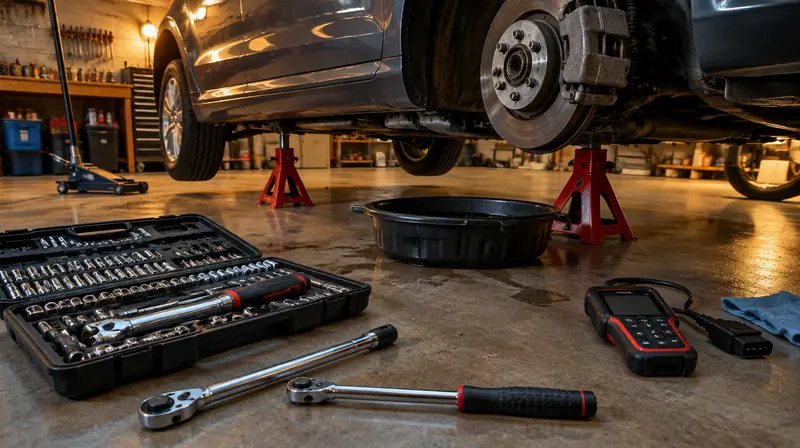
Every year, people are seriously injured or killed when a car falls off a jack. Jacks are designed to lift a vehicle, not to hold it while you work underneath. Hydraulic seals can leak, jacks can tip on uneven ground, and a car can shift when you pull on a stubborn bolt. The rule is simple: never put any part of your body under a car supported only by a jack.
Lift with a jack. Support with rated jack stands (or ramps) on solid, level ground. Then, and only then, go underneath.
Quick answer
- Buy a trolley (floor) jack rated for at least 2 tonnes (more for SUVs), with low profile if your car is low.
- Buy a pair of jack stands rated for at least the weight of the vehicle end you lift (3-tonne pair is a common choice for cars).
- Use the car's designated lifting and support points from the owner's manual.
- Always chock the wheels remaining on the ground and work on level concrete.
Types of jack
| Jack | Pros | Cons | Best use |
|---|---|---|---|
| Scissor jack (supplied with car) | Light, compact | Slow, less stable | Roadside wheel changes only |
| Trolley / floor jack | Fast, stable, wheels allow positioning | Heavy, bulky | Garage and driveway work |
| Bottle jack | High capacity, compact | Tall minimum height, small base | Trucks, SUVs, high vehicles |
| Low-profile / aluminium trolley jack | Fits under low cars; lighter | More expensive | Sports and lowered cars |
Choosing a trolley jack
- Capacity: 2–3 tonnes for cars; 3+ tonnes for SUVs and vans. You are lifting only part of the car, but extra capacity means more stability and durability.
- Minimum height: must slide under your car's jacking point.
- Maximum lift height: high enough to fit stands and remove a wheel, especially on SUVs.
- Saddle: a rubber pad protects pinch welds; slotted pads are available.
- Dual-pump / rapid-lift: fewer pumps to reach the vehicle.
Choosing jack stands
- Rated capacity per pair appropriate to your vehicle (check the label and standard, e.g. ASME PASE in the US or EN 1494 in Europe).
- Wide base for stability.
- Ratchet with locking pin or pin-type height adjustment. A secondary safety pin adds protection.
- Always use stands in pairs, on the same axle, at the same height.
- Inspect for bent legs, cracks and worn ratchets; follow manufacturer recalls.
Drive-on ramps are an excellent alternative for oil changes: stable, fast and no jacking required. Chock the rear wheels and engage the parking brake.
Where to lift
Your owner's manual shows the jacking points (for the supplied scissor jack, usually on the pinch weld behind the front wheels and in front of the rear wheels) and often the central lifting points for a trolley jack (front subframe, rear axle or tow hook area on some cars). Never lift on the oil pan, floor pan, suspension arms or plastic panels unless the manual says so. Place stands on strong points such as the pinch weld (with an adapter), subframe or frame rails.
How to raise a car safely
- Park on a flat, level, hard surface (concrete; not gravel, grass or hot asphalt).
- Engage the parking brake and put the gearbox in gear (manual) or Park (automatic).
- Chock the wheels at the opposite end from where you are lifting, front and back of the tyres.
- If removing wheels, slightly loosen the wheel nuts while the car is on the ground.
- Position the jack under the correct lifting point and raise the car slowly, watching that it lifts straight.
- Place jack stands under the correct support points and raise them to the same height, pins locked.
- Slowly lower the jack until the car rests on the stands. Leave the jack lightly in place as a backup if it does not obstruct work.
- Give the car a firm push at the side to check it is stable before going under.
To lower: raise the car slightly off the stands with the jack, remove the stands, and lower slowly, keeping feet and hands clear.
Frequently asked questions
Can I use bricks or wood blocks instead of jack stands?
No. Bricks and blocks can crack and slip. Use rated jack stands or ramps.
What capacity jack stands do I need?
A 3-tonne pair covers most cars and small SUVs. Check your vehicle's weight and choose stands with a generous margin.
This guide is general information, not professional advice. Always read your tool's manual, use the right protective equipment and follow local building and electrical codes. See our disclaimer.