Projects & How-To
How to Change Your Engine Oil and Filter at Home
Step-by-step DIY oil change: choosing the right oil, tools needed, lifting the car safely, draining, replacing the filter, torquing the drain plug, refilling and disposing of old oil.
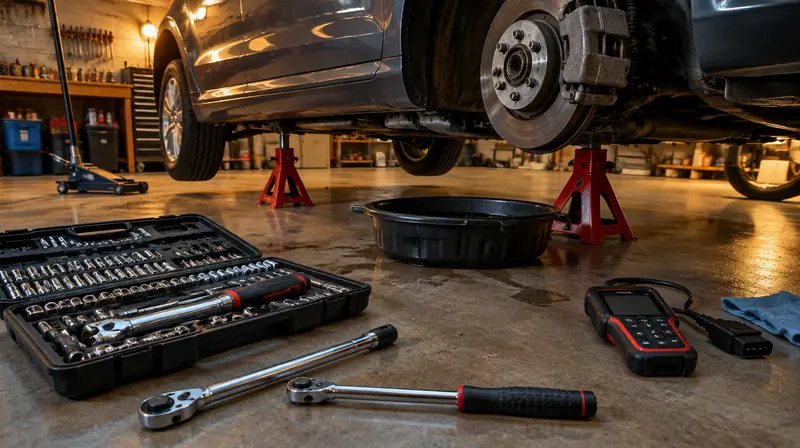
Changing your own oil is the gateway job for DIY car maintenance. It takes about an hour, needs a modest set of tools, and teaches you your way around the underside of your car. The key points are using the correct oil and filter, lifting the car safely, and tightening the drain plug to the right torque.
Tools and materials
- Correct engine oil (grade and specification from the owner's manual) and quantity
- New oil filter (or filter element) and drain plug washer
- Socket or wrench for the drain plug
- Oil filter wrench (cap, strap or claw) or filter housing socket
- Drain pan (larger than the oil capacity), funnel
- Torque wrench
- Ramps, or a trolley jack plus jack stands, wheel chocks
- Nitrile gloves, eye protection, rags, cardboard
Step 1: Get the right oil and filter
Your owner's manual lists the viscosity (e.g. 0W-20, 5W-30) and the specification (e.g. API SP, ILSAC GF-6, ACEA C3, or manufacturer approvals such as VW 504 00 or MB 229.51), plus the capacity with filter. Using the correct specification matters for engine protection and warranty, especially on modern and diesel engines with particulate filters.
Step 2: Prepare the car
- Run the engine for a few minutes so the oil flows easily, but not so long it is very hot. Hot oil causes burns.
- Park on level ground. Parking brake on, gear in Park or first.
- Drive onto ramps or raise the car and support it on stands. Chock the wheels. Never go under a car on a jack alone.
- Open the bonnet and remove the oil filler cap (this helps oil drain).
Step 3: Drain the oil
- Find the drain plug on the oil pan (sump), not the gearbox drain plug. Remove any undertray if needed.
- Place the drain pan slightly ahead of the plug; oil comes out at an angle.
- Loosen the plug with the socket, then unscrew the last turns by hand while pushing inward, and pull away quickly.
- Let it drain completely (10–15 minutes). Inspect the plug and fit a new washer.
Step 4: Replace the filter
- Spin-on filter: move the pan under the filter, loosen it with the filter wrench and unscrew by hand. Make sure the old rubber gasket came off with it.
- Smear a thin film of new oil on the new filter's gasket. Screw it on by hand until the gasket touches, then tighten as specified (usually about 3/4 turn by hand, or the torque printed on the filter/housing).
- Cartridge filter in a housing: unscrew the housing cap, replace the element and O-rings, and torque the cap to the specification (often printed on the cap).
Step 5: Refit the drain plug
Clean the sealing surface, fit the plug with its new washer by hand, then tighten to the specified torque with a torque wrench. Aluminium oil pans strip easily; overtightening is a common and expensive mistake.
Step 6: Refill and check
- Lower the car to level ground (the dipstick is only accurate when level).
- Pour in slightly less than the specified capacity through a funnel.
- Refit the filler cap. Start the engine and let it idle for a minute; the oil pressure light should go out within seconds.
- Check under the car for leaks at the plug and filter.
- Switch off, wait a few minutes, check the dipstick and top up to between the marks (do not overfill).
- Reset the service indicator if your car has one (see the manual).
Step 7: Dispose of the old oil
Pour used oil into the empty containers and take it with the old filter to a recycling point; many auto parts stores and recycling centres accept it. Never pour oil down drains or on the ground.
Used engine oil contains harmful compounds. Wear gloves, wash skin promptly, and keep it away from children and pets.
Frequently asked questions
How often should I change my oil?
Follow your owner's manual or the car's service indicator. Intervals vary widely (often 10,000–30,000 km / 5,000–15,000 miles or yearly), with shorter intervals for severe use.
Can I reuse the drain plug washer?
Crush washers are designed for single use. Replace them to prevent leaks.
This guide is general information, not professional advice. Always read your tool's manual, use the right protective equipment and follow local building and electrical codes. See our disclaimer.