Car Repair Tools
Torque Wrenches: Why You Need One and How to Use It Correctly
What a torque wrench does, click vs beam vs digital types, which range to buy, how to set and use it on wheel nuts and engine bolts, and how to store it so it stays accurate.
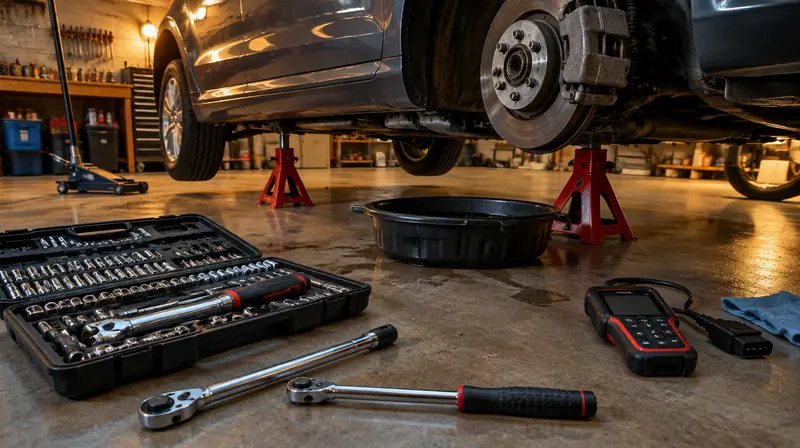
Bolts on a car are designed to be tightened to a specific torque. Too loose and a wheel can work free or an oil drain plug can leak; too tight and you can strip threads, stretch studs, crack parts or warp brake discs. A torque wrench removes the guesswork, and it is one of the most important tools for safe DIY car maintenance.
Quick answer
- A 1/2" click-type torque wrench, ~40–200 Nm (30–150 ft-lb) covers wheel nuts, suspension and brakes.
- A 3/8" wrench, ~10–60 Nm covers drain plugs, spark plugs and smaller engine bolts.
- Always use the torque figure from your vehicle's service information.
- Store click wrenches at the lowest setting (not below) to preserve accuracy.
Where a torque wrench matters most
- Wheel nuts and bolts (safety-critical)
- Brake caliper and caliper bracket bolts
- Suspension components
- Oil drain plug (aluminium sumps strip easily)
- Spark plugs
- Engine covers, oil filter housings and other aluminium parts
- Bicycles and motorcycles (carbon and alloy components)
Types of torque wrench
| Type | How it works | Pros | Cons |
|---|---|---|---|
| Click-type | Set the torque on the handle; it clicks and releases slightly when reached | Easy, affordable, most popular | Needs correct storage and occasional calibration |
| Beam-type | A pointer shows torque on a scale as you pull | Cheap, simple, holds calibration | Must read the scale while pulling |
| Dial-type | Dial gauge shows torque | Accurate, shows peak | Expensive, fragile |
| Digital | Electronic sensor with beep/vibration | Accurate, easy units, angle mode | Needs batteries, higher cost |
| Torque angle gauge | Measures rotation angle after initial torque | Needed for torque-to-yield bolts | Used alongside a torque wrench |
Choosing the right range
Torque wrenches are most accurate in the middle of their range (typically ±3–4% for click-types across the upper part of their range). Choose a wrench whose range comfortably covers the values you need without working at the extremes.
| Job | Typical torque range (check your manual) |
|---|---|
| Spark plugs | ~15–30 Nm |
| Oil drain plug | ~20–45 Nm |
| Brake caliper bolts | ~25–120 Nm depending on bolt |
| Wheel nuts (cars) | ~80–140 Nm |
These ranges are only to help choose a wrench. The correct value for your car is in its service data and often in the owner's manual for wheel nuts.
How to use a click-type torque wrench
- Find the specified torque and confirm units (Nm vs ft-lb; 1 ft-lb ≈ 1.356 Nm).
- Unlock the handle and turn it until the main scale and fine scale show the value. Lock the handle.
- Make sure threads are clean and in good condition. Unless the manufacturer specifies lubrication, torque values usually assume clean, dry threads.
- Run the fastener down first with a normal ratchet or by hand, until snug.
- Hold the wrench by the handle grip (not the shaft) and pull smoothly and steadily, at right angles to the wrench.
- Stop as soon as it clicks. Do not continue pulling or "double click" repeatedly; that adds torque.
- For wheel nuts, tighten in a star (criss-cross) pattern, in two stages (e.g. half torque, then full torque).
- Re-check wheel nuts after 50–100 km (30–60 miles), especially on alloy wheels.
- Use a torque wrench to loosen bolts (unless the manual allows it); use a breaker bar.
- Use extensions or adapters that change the effective length (crow's feet) without correcting the setting.
- Drop it; a dropped wrench may need calibration checking.
Storage and calibration
- Wind click-type wrenches down to their lowest marked setting after use (not to zero or below). This relaxes the spring.
- Store in the case, clean and dry.
- Have it calibrated periodically if you use it a lot; many manufacturers suggest yearly or after a set number of cycles for professional use.
Frequently asked questions
Do I really need a torque wrench to change a wheel?
At the roadside, tighten firmly with the lug wrench and have the torque checked as soon as possible. In the garage, always use a torque wrench.
Which torque wrench should I buy first?
A 1/2" drive click-type wrench covering roughly 40–200 Nm, which handles wheels, brakes and suspension.
This guide is general information, not professional advice. Always read your tool's manual, use the right protective equipment and follow local building and electrical codes. See our disclaimer.