Electronics & Appliance Repair
Soldering for Beginners: Irons, Stations, Solder and Flux
How to choose a soldering iron or station, which solder and flux to use, tip types and temperatures, and step-by-step technique for through-hole joints, wires and desoldering.
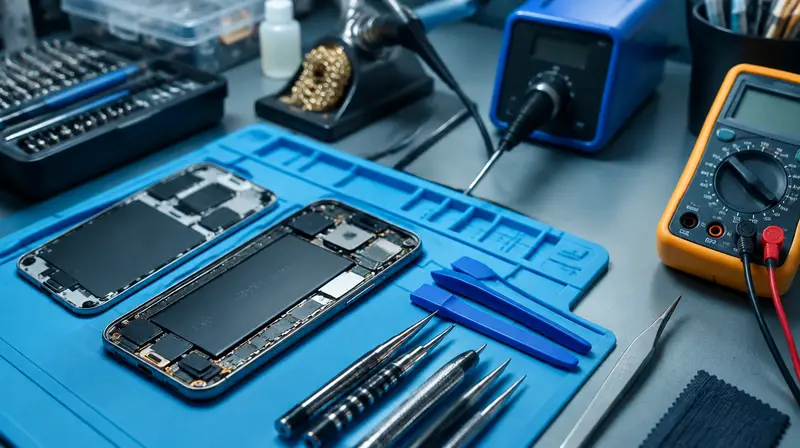
Soldering joins metal parts with a low-melting alloy to make electrical connections. It is the key skill for repairing cables, connectors, headphones, controllers, LED strips and circuit boards. With a decent temperature-controlled iron and a little practice, good joints are easy.
Quick answer
- Buy a temperature-controlled iron or station (around 60–80 W), not an unregulated plug-in iron.
- Use rosin-core solder, 0.6–1.0 mm. Leaded 63/37 is easiest to learn with; lead-free is required for some work and more common today.
- Add flux, keep the tip clean and tinned, and heat the joint, not the solder.
- Work with ventilation / fume extraction and wash hands after handling leaded solder.
Irons and stations
| Type | Pros | Cons |
|---|---|---|
| Basic plug-in iron (no control) | Cheap | Overheats, oxidises tips, damages boards |
| Temperature-controlled pen iron (USB-C / DC) | Compact, heats in seconds, portable | Needs a suitable power supply |
| Soldering station | Stable temperature, holder, sponge; durable | Takes bench space |
| Hot air rework station | SMD components, heat shrink | Advanced; separate skill |
| Gas (butane) iron | Cordless, for field repairs | Less precise |
Tips (bits)
- Chisel (screwdriver) 1.6–2.4 mm: the best general-purpose tip; good heat transfer.
- Conical: fine work, but transfers heat poorly on larger joints.
- Bevel / hoof: drag soldering SMD pins.
- Large chisel: thick wires, connectors and ground planes.
Solder and flux
- Leaded (Sn63/Pb37 or 60/40): melts at ~183–190°C, flows easily, shiny joints. Contains lead: ventilate, do not eat at the bench, wash hands.
- Lead-free (SAC305, Sn99.3Cu0.7): melts at ~217–227°C; needs higher temperature and more flux. Required in commercial electronics in many regions.
- Diameter: 0.5–0.8 mm for electronics; 1.0 mm+ for wires.
- Flux: cleans oxides so solder flows. Use rosin or no-clean flux in pen or gel form. Never use acid flux (plumbing) on electronics.
Temperature
Start around 320–350°C for leaded solder and 350–380°C for lead-free, adjusting for joint size. Too hot oxidises the tip and can lift pads; too cold makes dull, grainy "cold joints".
Other tools you need
- Brass wool tip cleaner (or a damp sponge)
- Helping hands / PCB holder or small vice
- Flush cutters, tweezers, wire strippers
- Desoldering pump and desoldering braid (wick)
- Fume extractor fan with carbon filter
- Safety glasses; heat-resistant silicone mat
- Isopropyl alcohol (IPA 99%) and a brush to clean flux
How to solder a through-hole component
- Clean the board and component leads. Insert the component and bend the leads slightly to hold it.
- Tin the iron tip with a little fresh solder.
- Touch the tip to both the pad and the lead at the same time for 1–2 seconds.
- Feed solder into the joint (not onto the iron). It should flow around the lead and form a small cone.
- Remove the solder, then the iron. Do not move the part while it cools.
- Trim the lead with flush cutters. A good joint is smooth, shiny (leaded) and concave.
How to join two wires
- Slide heat-shrink tubing onto one wire first.
- Strip 5–10 mm of insulation, twist strands, and tin each wire.
- Join the wires (inline splice or twisted), heat and add solder until it flows through.
- Let it cool, slide the heat shrink over and shrink it with a heat gun or hot air.
Desoldering
- Solder wick: place braid on the joint, press with the iron; the braid soaks up solder. Add flux for best results.
- Solder sucker: melt the joint and trigger the pump.
- Adding fresh leaded solder to old lead-free joints helps them melt.
Frequently asked questions
What wattage soldering iron do I need?
Wattage matters less than temperature control and recovery. A regulated 60–80 W iron handles most electronics and wires.
Why won't solder stick?
Usually oxidised surfaces, a dirty tip, not enough heat, or no flux. Clean, add flux and heat the joint properly.
This guide is general information, not professional advice. Always read your tool's manual, use the right protective equipment and follow local building and electrical codes. See our disclaimer.