Power Tools Explained
Angle Grinders Explained: Sizes, Discs and Safe Use
A beginner's guide to the angle grinder: disc sizes, cutting and grinding discs, diamond blades, key safety features and how to cut and grind safely.
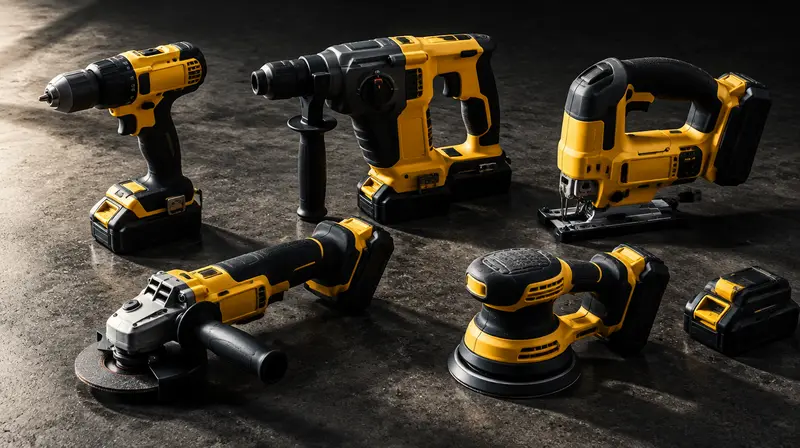
The angle grinder is one of the most versatile tools you can own. With the right disc it cuts metal bars, bolts, tiles, paving and stone, grinds welds, removes rust and paint, and sharpens blades. It is also one of the most dangerous handheld tools. Treat it with respect, use the guard and follow the rules below.
Quick answer
- Most homeowners need a 115 mm (4.5 in) or 125 mm (5 in) grinder.
- Look for soft start, anti-kickback, restart protection and an adjustable guard.
- Use the correct disc for the job, rated for at least the grinder's RPM.
- Always: guard on, side handle on, glasses + face shield, gloves, hearing protection.
What an angle grinder can do
- Cut metal: rebar, threaded rod, bolts, pipes, sheet metal, padlocks
- Cut tiles, stone, paving slabs and concrete (diamond blade)
- Grind welds and sharp edges
- Remove rust and paint (wire cup brush, flap disc)
- Sharpen lawn mower blades and axes
- Cut chases in walls (with care and dust extraction)
Sizes
| Disc size | Max cut depth | Best for |
|---|---|---|
| 115 mm / 4.5 in | ~28 mm | Light DIY, small metal cuts, tile trimming |
| 125 mm / 5 in | ~33 mm | The most popular all-round size |
| 150 mm / 6 in | ~40 mm | Heavier metalwork |
| 230 mm / 9 in | ~65 mm | Paving, kerbs, heavy cutting; two-handed, corded |
Cordless 18V grinders are excellent for 115/125 mm discs. For 230 mm discs, corded tools are the norm.
Discs and accessories
| Accessory | Use | Notes |
|---|---|---|
| Thin cutting disc (1.0–1.6 mm) | Cutting metal | Cut with the edge only; never grind with the face |
| Grinding disc (6–7 mm) | Removing metal, welds | Hold at 15–30° to the work |
| Flap disc | Grinding and finishing | Smoother finish, easier for beginners |
| Diamond blade (segmented / continuous / turbo) | Tiles, stone, concrete, brick | Continuous rim for tiles, segmented for concrete |
| Wire cup / wheel brush | Rust and paint removal | Wires fly off; wear full face protection |
| Strip disc (poly / clean and strip) | Paint and rust removal | Less aggressive than wire |
- Never fit a wood-cutting saw blade or chainsaw disc to a grinder unless both grinder and accessory are explicitly designed for it. These cause severe injuries.
- Never use a disc larger than the grinder is designed for, or with a lower RPM rating.
- Never remove the guard.
Features to look for
- Soft start: reduces the jolt on switch-on.
- Kickback control / electronic clutch: cuts power if the disc jams.
- Restart protection (no-volt release): prevents the tool starting unexpectedly if power returns.
- Paddle switch with lock-off: releases automatically if you let go. Safer than slide switches for beginners.
- Tool-free guard adjustment and a side handle that fits both sides.
- Brake: stops the disc within a couple of seconds.
- Variable speed: useful for polishing and wire brushes.
How to cut metal safely
- Put on safety glasses, a face shield, hearing protection, leather gloves and long sleeves (not loose). Remove flammables from the area; sparks travel several metres.
- Clamp the workpiece firmly. Support both sides so the cut does not close on the disc.
- Check the disc for damage. Fit it with the correct flange orientation and tighten the nut with the key.
- Position the guard between the disc and your body. Fit the side handle.
- Stand to the side of the disc's plane. Start the grinder away from the work and let it reach full speed.
- Bring the disc to the mark and cut with light pressure, keeping the disc straight. Do not twist or bend it in the cut.
- Release the switch and wait for the disc to stop before putting the grinder down.
How to cut tiles and stone
- Use a continuous-rim diamond blade for tiles and a segmented blade for concrete and brick.
- Mark the cut with tape; clamp the tile on a firm surface.
- Score a shallow first pass, then cut deeper in several passes.
- Dry cutting creates hazardous silica dust. Use a P100/FFP3 respirator, work outdoors or use a grinder with dust extraction shroud and vacuum, or wet cut where the tool allows.
Frequently asked questions
Which is better for beginners, 115 or 125 mm?
125 mm is the most versatile, with a wider range of discs. 115 mm is slightly lighter and easier to handle.
Can I cut wood with an angle grinder?
We do not recommend it for beginners. Use a jigsaw, circular saw or multi-tool. Wood-cutting grinder attachments carry a high risk of kickback.
Why did my cutting disc shatter?
Common causes are twisting the disc in the cut, grinding with the face of a cutting disc, a dropped or damaged disc, or a disc with a lower speed rating than the grinder.
This guide is general information, not professional advice. Always read your tool's manual, use the right protective equipment and follow local building and electrical codes. See our disclaimer.