Care & Maintenance
Cordless Tool Battery Care: Charging, Storage and Winter Tips
How to make lithium-ion power tool batteries last longer: charging habits, ideal storage charge and temperature, using batteries in winter, and when to replace them.
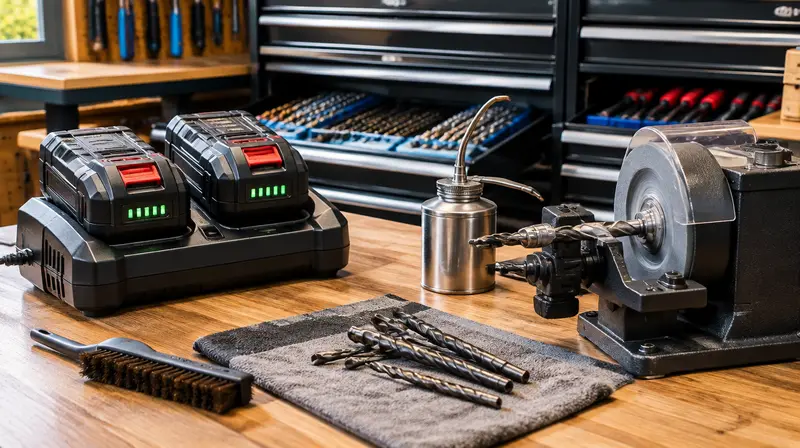
Batteries are the most expensive part of a cordless tool system, and they are also the part most affected by how you treat them. Lithium-ion packs do not need the old "full discharge" routine of NiCd batteries, but they hate heat, deep discharge and long storage at full charge. A few simple habits can add years to their life.
Quick answer
- Store batteries at about 40–60% charge (2–3 bars) in a cool, dry place.
- Avoid heat: never leave them in a hot car or in direct sun. Let hot batteries cool before charging.
- Do not run them completely flat repeatedly; stop when the tool slows.
- Winter: store and charge indoors at room temperature; warm cold batteries before use.
- Use the manufacturer's charger.
How lithium-ion tool batteries age
Every lithium-ion cell slowly loses capacity through chemical changes. The main accelerators are:
- High temperature, especially when combined with a high charge level.
- Deep discharge: cells drained to very low voltage can be permanently damaged. Tool electronics usually cut off before this, but long storage of an empty battery can still drain it too far.
- High current load for long periods (heavy grinding, sawing) heats cells.
- Age: batteries age even unused.
Charging habits
- Charging after each use is fine; lithium-ion has no memory effect.
- If a battery is hot after heavy use, let it cool for 15–30 minutes. Many chargers wait automatically until the pack cools.
- Charge at room temperature, roughly 10–30°C (50–86°F), ideally.
- Do not leave batteries on the charger for weeks; most chargers stop charging when full, but removing them is good practice.
- Charge on a hard, non-flammable surface, away from flammables, not in direct sunlight.
- Keep charger contacts and battery terminals clean and dry.
Storage
| Condition | Recommendation |
|---|---|
| Charge level | 40–60% for storage longer than a few weeks |
| Temperature | Cool and stable, ideally around 10–25°C (50–77°F) |
| Location | Dry indoor shelf; not a hot shed, car trunk or attic |
| Check-ups | Every 3–6 months; top up to storage level if needed |
| Terminals | Covered, away from metal objects |
Using and storing batteries in winter
- Cold reduces available power and runtime. Below freezing, performance drops noticeably.
- Store batteries indoors and bring them out just before use. Keep spares in an inside pocket or insulated bag.
- Do not charge a battery below 0°C (32°F). Most chargers will refuse, but let it warm to room temperature first.
- Heated battery packs and high-output packs cope better with cold, but still benefit from being stored warm.
Signs a battery needs replacing
- Runtime has dropped significantly (e.g. to half of what it was).
- The charger shows a fault light or refuses to charge after cooling.
- The pack gets unusually hot, swells, cracks, smells or leaks.
- Voltage sag: the tool stops under load even though the gauge shows charge.
Stop using any battery that is swollen, cracked, dropped hard, soaked in water or smells. Store it outside on a non-flammable surface and take it to a battery recycling point. Do not try to open or repair tool battery packs.
Recycling
Never throw lithium batteries in household trash. Tape the terminals and take them to a battery collection point; many hardware stores accept them.
Frequently asked questions
Should I fully drain a battery before charging?
No. That was true for old NiCd batteries. Lithium-ion batteries prefer partial cycles.
Can I leave batteries in the garage in winter?
It is better not to, especially if temperatures fall well below freezing or rise high in summer. Store them indoors.
How many years does a tool battery last?
With good care, typically 3–7 years or several hundred to about a thousand cycles.
This guide is general information, not professional advice. Always read your tool's manual, use the right protective equipment and follow local building and electrical codes. See our disclaimer.