Care & Maintenance
Sharpening Drill Bits, Knives, Chisels and Chainsaw Chains
How to tell when bits, blades and chains are dull, and how to sharpen HSS drill bits, chisels, utility and workshop knives, and chainsaw chains, plus when to replace instead.
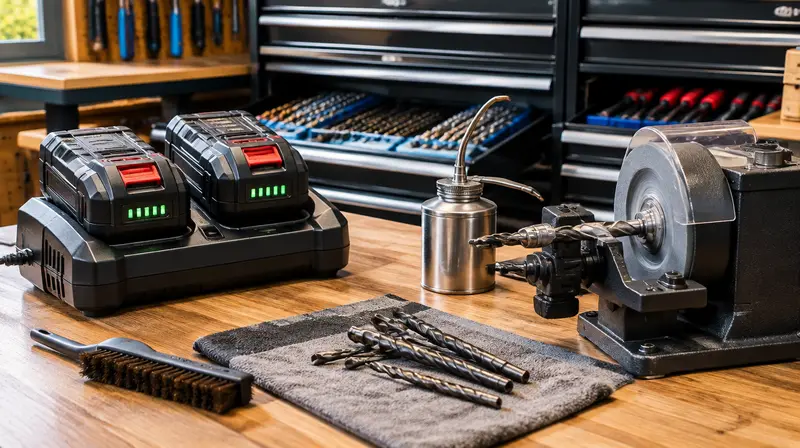
A sharp tool is a safe tool. Dull bits overheat and wander, dull saws bind and kick back, and a dull chisel slips instead of cutting. Some edges are worth sharpening yourself, others are cheaper to replace. This guide covers the common ones.
Sharpen or replace?
- Sharpen: HSS drill bits (larger sizes), chisels, plane irons, knives, axes, chainsaw chains, mower blades.
- Replace: small drill bits, utility knife blades, jigsaw and multi-tool blades, most masonry bits, sanding discs.
- Professional service: carbide circular saw blades, router bits, planer knives.
Signs an edge is dull
- You need more pressure than before.
- Smoke, burning or blue discolouration (metal drilling).
- Rough, torn or burnt cuts.
- The tool wanders, chatters or binds.
- Chainsaw produces fine dust instead of chips.
HSS drill bits
Standard twist bits have a 118° or 135° point. They can be sharpened on a bench grinder with practice, or much more easily with a drill bit sharpening jig or a dedicated drill bit sharpener that holds the correct angle and relief.
- Set the sharpener for the bit diameter and point angle.
- Grind each cutting lip equally so the point is centred.
- Check both lips are the same length and that there is relief (the heel behind the edge is lower than the edge).
- Test on scrap metal: two even spirals of swarf indicate a good grind.
Bits under about 4 mm are usually cheaper to replace. Masonry bits with carbide tips can be touched up with a diamond file, but badly worn ones should be replaced.
Chisels and plane irons
- Flatten the back on a coarse stone (only once, near the edge).
- Hone the bevel at the correct angle (commonly 25° primary, 30° micro-bevel) using a honing guide on progressively finer stones or diamond plates (e.g. 400 → 1000 → 4000+ grit).
- Remove the burr by lightly honing the back.
- Strop on leather with compound for a razor edge.
Knives
- Utility knives: replace or snap off blades; it is cheap and safer.
- Fixed-blade workshop knives: sharpen on a whetstone or guided sharpener at a consistent angle (around 20–25° per side for workshop knives).
- Pull-through sharpeners are quick but remove more metal.
Chainsaw chains
A sharp chain cuts faster and safer. Sharpen with a round file of the correct diameter for your chain pitch, in a file guide, or with an electric chain sharpener.
- Engage the chain brake, wear gloves, and clamp the bar in a vice.
- Use the specified file size and filing angle (often 25–35°, marked on the file guide).
- File each cutter from inside to outside, the same number of strokes, then turn the saw and do the other side.
- Check and file down depth gauges (rakers) with a flat file and gauge every few sharpenings.
- Replace chains that are damaged, stretched or have very short cutters.
Lawn mower blades and axes
Remove the mower blade (disconnect the spark plug lead or remove the battery first), clamp it, and file or grind the cutting edge at the original angle. Balance the blade on a nail or balancer before refitting. Axes can be sharpened with a file and puck stone.
Sharpening safety
- Wear eye protection with grinders; keep tool rests close to the wheel.
- Do not overheat hardened steel (it loses temper, turning blue). Dip in water often.
- Clamp the workpiece; keep fingers behind the edge.
Frequently asked questions
Is it worth sharpening drill bits?
For larger HSS bits and quality cobalt bits, yes. Small cheap bits are easier to replace.
Can I sharpen circular saw blades myself?
Carbide-tipped blades should be sharpened by a professional service. Cheap blades are usually replaced.
This guide is general information, not professional advice. Always read your tool's manual, use the right protective equipment and follow local building and electrical codes. See our disclaimer.