Care & Maintenance
Tool Storage and Organization: Cases, Organizers and Small Workshops
Practical ways to store and organize tools in an apartment closet, balcony, garage or small workshop: modular cases, pegboards, wall systems, rust prevention and battery storage.
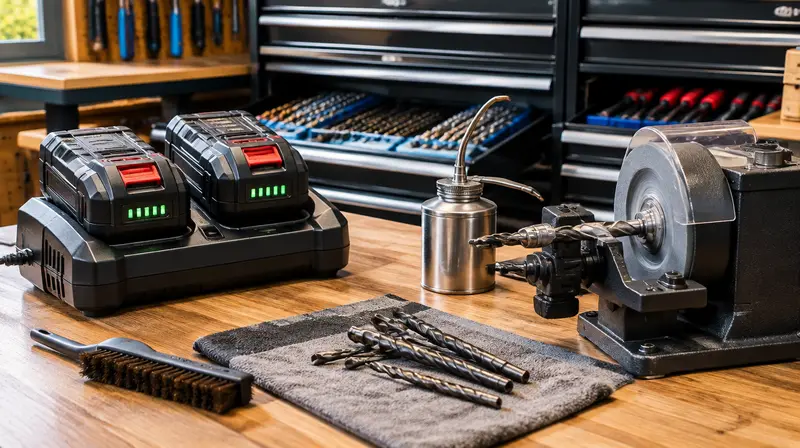
Good storage saves time (you can find things), money (you do not buy duplicates) and tools (they do not rust or get damaged). Whether you have a single closet shelf or a full garage, here is how to organise tools efficiently and safely.
Quick answer
- Apartment: one toolbag for hand tools, a stackable case system for power tools, small-parts organisers.
- Balcony: weatherproof lockable cabinet; batteries and chemicals indoors.
- Garage / workshop: wall systems (pegboard, French cleats, slatwall), a workbench, rolling cabinet.
- Store batteries indoors, keep tools dry, and lock away sharp and dangerous items.
Principles of good tool storage
- Frequently used tools within reach, occasional tools higher or further back.
- Everything has a place: shadow boards, labelled drawers or foam inserts show when something is missing.
- Group by job: plumbing kit, electrical kit, painting kit.
- Protect from moisture and temperature extremes.
- Safety: lock away blades, power tools and chemicals if there are children; see storage with kids.
Apartment storage
- Tool bag or tote for core hand tools; open-top totes are easiest to grab.
- Modular stackable cases (many brands offer interlocking systems) for power tools and accessories, stackable in a closet.
- Small-parts organisers with removable bins for screws, plugs and bits.
- Over-the-door organisers or a closet shelf with labelled boxes.
- Under-bed or under-stairs drawers for long items (levels, saws).
Balcony storage
- Use a weatherproof, lockable resin or metal cabinet with ventilation.
- Keep it out of direct sun if possible; interiors can get very hot.
- Store batteries, chargers, electronics and chemicals indoors, not on the balcony.
- Add moisture absorbers (silica gel) to prevent rust.
- Check building rules; some prohibit storage or cabinets on balconies.
Garage and workshop
| System | Pros | Best for |
|---|---|---|
| Pegboard | Cheap, flexible, tools visible | Hand tools, small power tools |
| French cleats | Very strong, fully customisable | Heavy power tools, custom holders |
| Slatwall / rail systems | Neat, many accessories | Garden tools, cases, shelves |
| Rolling tool chest | Organised drawers, mobile | Mechanics' tools, sockets |
| Workbench with storage | Work surface + storage | Every workshop |
| Overhead racks | Uses ceiling space | Seasonal and bulky items |
Organising small parts and accessories
- Drill bits in indexed cases by size and type.
- Screwdriver bits in a bit holder or magnetic strip.
- Screws and fixings in labelled bins by type and length.
- Saw blades and discs in their original packaging or dedicated holders, labelled by material.
Preventing rust
- Keep the space dry; use a dehumidifier in damp garages.
- Wipe tools after use, especially after contact with water or sweat.
- Apply a light oil or rust inhibitor to hand tools occasionally.
- Use VCI (vapour corrosion inhibitor) liners or silica gel in drawers and cases.
Batteries and chargers
Create a charging station on a non-flammable surface indoors, away from flammables. Wall-mounted battery holders keep packs organised and visible. Follow our battery care guide for storage charge and temperature.
Frequently asked questions
Is it OK to keep tools in a shed?
Hand tools and corded tools, yes, if the shed is dry and secure. Keep batteries, chargers and electronics indoors.
What is the best storage for a small apartment?
A stackable modular case system plus one hand-tool bag. It stays compact and moves easily.
This guide is general information, not professional advice. Always read your tool's manual, use the right protective equipment and follow local building and electrical codes. See our disclaimer.