Tool Safety
Storing Tools Safely When You Have Children
How to store power tools, blades, batteries and chemicals safely in a home with children, plus how to involve kids in DIY safely.
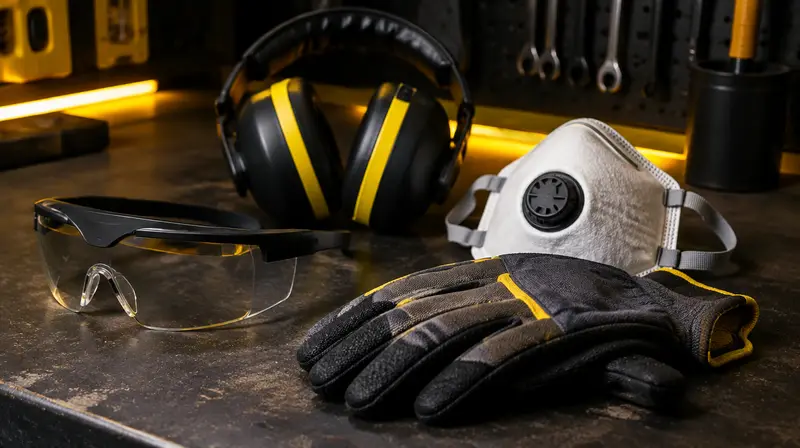
Children are curious, fast and good at climbing. A utility knife left on a counter, a battery charger at floor level or a drill left with a battery fitted can turn into an accident in seconds. Storing tools safely is easy once you set up a system, and it also makes your tools easier to find.
Quick checklist
- Lock power tools, blades and chemicals in a cabinet, toolbox or room.
- Remove batteries from cordless tools after every use, and store them separately.
- Retract or store blades in a closed container.
- Store high: heavy items low (so they cannot fall), sharp and toxic items high and locked.
- Never leave tools unattended mid-job when children are around.
Power tools
- Remove the battery or unplug the tool whenever you step away, even for a minute. Store batteries separately, out of reach.
- Keep tools in their cases or in a lockable cabinet. Many toolboxes accept a small padlock.
- Some corded tools and extension leads can be secured with plug locks.
- Store heavy tools on low shelves so they cannot be pulled down onto a child.
Blades, knives and sharp accessories
- Choose auto-retracting utility knives for households with children.
- Store spare blades, saw blades, drill bits and chisels in closed boxes.
- Dispose of used blades in a sealed container (a blade bank or old jar with a lid) before putting them in the trash.
Batteries and chargers
- Lithium-ion tool batteries can short-circuit if their terminals touch metal objects, such as keys or coins. Keep terminal covers on stored batteries.
- Charge on a hard, non-flammable surface, out of children's reach.
- Button and coin cells (in multimeters, laser tools and remote controls) are extremely dangerous if swallowed. Store spares in their child-resistant packaging, and secure battery compartments with screws. Seek emergency medical help immediately if you suspect one has been swallowed.
Chemicals and consumables
- Paints, solvents, adhesives, lubricants, antifreeze and brake fluid should be stored in their original containers, tightly closed and locked away.
- Never decant chemicals into drink bottles.
- Keep screws, nails and small fixings in closed organisers; they are choking hazards.
Storage ideas
| Solution | Good for | Child safety |
|---|---|---|
| Lockable metal cabinet | Power tools, chemicals | Excellent |
| Toolbox with padlock | Hand tools, blades | Very good |
| High wall-mounted shelving | Light items, cases | Good (secure shelves to the wall) |
| Pegboard on the wall | Hand tools in a locked garage or workshop | Only if the room is locked |
| Cabinet with child locks | Chemicals under a sink | Moderate |
More organising ideas are in our tool storage and organisation guide.
Working with children in the house
- Keep children out of the room when using power tools. Close the door or use a safety gate.
- Clean up dust and offcuts as you go; sawdust and small screws end up in mouths.
- Put tools away at the end of each session, even if the job is not finished.
- Be careful with extension cords across walkways.
Teaching children to use tools
DIY can be a great way to teach kids practical skills. Start with age-appropriate hand tools under direct supervision: a small hammer and large nails into softwood, a hand screwdriver, sandpaper and a tape measure. Give them their own safety glasses. Power tools should only come later, one-to-one, with close supervision and a tool suited to their size. Rules on minimum ages vary; use common sense and the manufacturer's guidance.
Frequently asked questions
Is it safe to leave a battery in a cordless tool?
Not if there are children around. Remove batteries after use so the tool cannot be switched on.
Where should I store tool batteries?
In a cool, dry place out of reach, with terminal covers on, away from metal objects and heat sources.
This guide is general information, not professional advice. Always read your tool's manual, use the right protective equipment and follow local building and electrical codes. See our disclaimer.