Beginners: Start Here
Corded vs Cordless Power Tools: Pros, Cons and When to Choose Each
Cordless or corded? Compare power, runtime, weight, cost and convenience, and see which tools are better with a battery and which are still better plugged in.
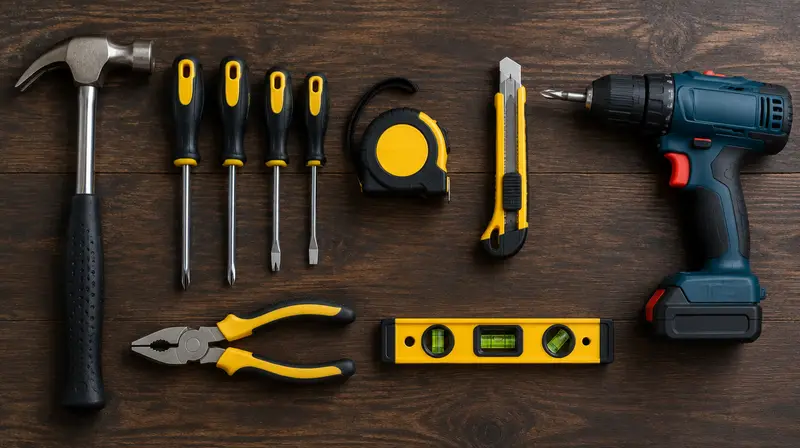
Ten years ago, serious tools had cords and cordless tools were for light jobs. Today, 18V brushless tools match or beat many corded models. But corded tools still make sense for some jobs and budgets. Here is how to decide, tool by tool.
Quick answer
- Choose cordless for drills, drivers, impact drivers, jigsaws, multi-tools, small grinders and anything you use in short bursts or around the house.
- Choose corded for tools that run continuously at high power: large angle grinders, heavy rotary hammers for chiselling, table and mitre saws, routers, heat guns, mixers and shop vacuums (for long sessions).
- Cordless costs more up front because of batteries, but once you own a platform, each extra "bare tool" is cheaper.
How cordless tools caught up
Three changes made cordless tools genuinely powerful:
- Lithium-ion batteries hold more energy for their weight than old NiCd packs, do not suffer from "memory" and hold charge in storage.
- Brushless motors are more efficient, so more of the battery's energy becomes work instead of heat.
- Electronics in the tool and battery protect cells from overheating and over-discharge, and allow high current draw safely.
Cordless: pros and cons
Pros
- Work anywhere: attic, garden, car, apartment with no nearby socket
- No cord to trip over or cut
- Faster to set up for small jobs
- One battery platform powers dozens of tools
- Safer near water (low voltage DC)
Cons
- Batteries are expensive and wear out after several hundred cycles
- Runtime is limited on high-draw tools
- Heavier than equivalent corded tools because of the battery
- Platforms lock you into one brand
Corded: pros and cons
Pros
- Unlimited runtime at full power
- Cheaper to buy, no batteries to replace
- Often lighter for the same power
- Ideal for stationary and high-draw tools
Cons
- Need a socket or extension lead
- Cord can be cut by saws and grinders
- Less convenient for quick jobs and at height
Tool by tool: which power source makes sense?
| Tool | Best choice for most beginners | Why |
|---|---|---|
| Drill-driver | Cordless | Short bursts of use, convenience matters most |
| Impact driver | Cordless | Corded versions are rare; cordless is the standard |
| Rotary hammer (SDS-plus) | Either | Cordless is great for drilling holes; corded is better for long chiselling sessions |
| Angle grinder 115/125 mm | Either | Cordless is handy for quick cuts; corded for long grinding |
| Angle grinder 230 mm | Corded | Very high power draw |
| Jigsaw | Cordless | Cordless jigsaws cut as well as corded ones |
| Circular saw | Either | Cordless for occasional cuts; corded for heavy use |
| Mitre saw / table saw | Corded | Stationary, long sessions, lower cost |
| Orbital sander | Either | Corded is cheaper and runs all day; cordless is convenient |
| Router | Corded (large), cordless (trim) | Continuous high load |
| Heat gun | Corded | Heating elements drain batteries fast |
| Paddle mixer | Corded | Continuous high torque |
| Shop vacuum | Corded for renovation, cordless for quick clean-ups | Long runtime needed during sanding and cutting |
The real cost of cordless
A cordless drill kit with two batteries and a charger might cost $150, while a corded drill of similar quality costs $60. That looks like a big difference, but the second, third and fourth cordless tools are sold "bare" (without battery) for less than a kit. Over five or six tools, a single battery platform often works out similar in cost to buying corded, and much more convenient.
Batteries do wear out. A quality lithium-ion pack typically lasts several hundred to around a thousand charge cycles, which for a home user often means many years. Our battery care guide explains how to make them last.
Before you buy your first cordless tool, decide on a battery platform. Read why choosing one battery system matters. Mixing brands means multiple chargers and batteries that do not fit each other's tools.
A sensible mixed approach
Most experienced DIYers end up with a mix: a cordless platform for the handheld tools they grab every week, plus a few corded tools for heavy, stationary or occasional jobs. For example:
- Cordless: drill-driver, impact driver, jigsaw, multi-tool, small grinder, work light.
- Corded: SDS-plus rotary hammer for renovation, orbital sander, heat gun, paddle mixer, shop vacuum.
Frequently asked questions
Are cordless tools as powerful as corded?
For drills, drivers, jigsaws and small grinders, modern 18V brushless tools match most corded equivalents. For large grinders, saws and heavy chiselling, corded tools still deliver more sustained power at lower cost.
How long do cordless batteries last?
Typically several hundred to about a thousand full charge cycles, or roughly 3 to 7 years for home use depending on care and storage.
Is 12V enough?
12V tools are lighter and compact, and great for furniture, cabinets and electrical work. For masonry drilling and heavier cutting, choose 18V/20V.
This guide is general information, not professional advice. Always read your tool's manual, use the right protective equipment and follow local building and electrical codes. See our disclaimer.