Beginners: Start Here
DIY vs Professional Power Tools: Is It Worth Paying More?
What really separates homeowner-grade tools from professional ones: motors, gearboxes, batteries, duty cycle and warranty, and when paying more is worth it.
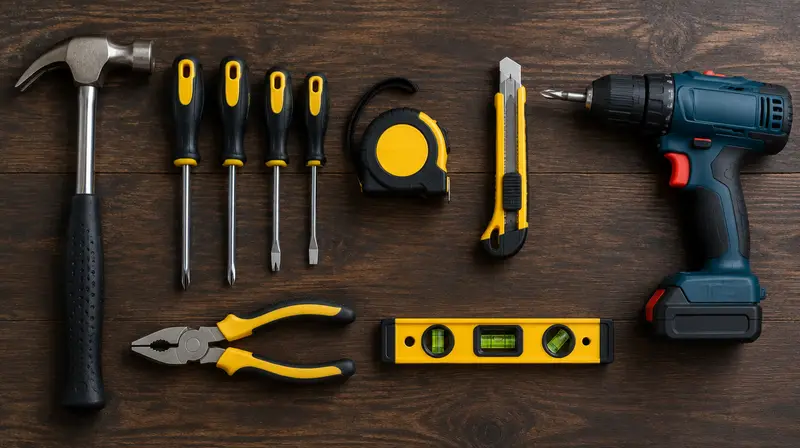
A professional drill can cost three times as much as a DIY model from the same brand. Both drill holes and drive screws, so what are you paying for? This guide explains the real differences and helps you decide where it makes sense to spend more.
Quick answer
- Professional tools are built for all-day, every-day use: stronger gearboxes, better cooling, metal parts, better dust protection, and longer warranties on some lines.
- DIY tools are designed for occasional use and are lighter and cheaper. For most homeowners, they are perfectly adequate.
- Pay more for tools you use often or push hard (drill, rotary hammer, grinder). Save on tools you use a few times a year.
What "professional" really means
Manufacturers often split their brands or lines by user. Bosch uses blue for Professional and green for DIY. Other groups own separate brands for different tiers (for example Stanley Black & Decker owns DeWalt for trade and Black+Decker for home). Even within one brand, there are basic, mid and premium lines. Read our brand guide for who owns what.
The key differences
1. Duty cycle and durability
A professional tool is expected to run for hours a day, be dropped off a ladder and be carried in a van. It will usually have a metal gear housing, sealed switches and better bearings. A DIY tool may have a plastic gear housing and simpler bearings. Used a few times a month, it will last years; used daily on a building site, it may fail within months.
2. Motor and electronics
Premium lines usually use brushless motors, electronic overload protection, and multiple speed/mode settings. Budget DIY lines often use brushed motors. See our glossary for the difference.
3. Power and torque
Top-tier tools deliver more torque and speed. However, a DIY drill with 40–60 Nm is more than enough for furniture, shelves and pilot holes. You only need 100+ Nm for large-diameter holes, long screws into hardwood and heavy construction.
4. Ergonomics and weight
Pro tools are often more compact for the same power, with better balance, rubber overmoulding and belt clips. DIY tools can be bulkier.
5. Accessories and chucks
Pro drills usually have 13 mm (1/2 in) all-metal chucks. Entry-level drills may have 10 mm plastic chucks that slip under heavy load.
6. Warranty and service
Warranty terms vary by brand, region and whether you register the tool. Some pro lines offer 3 years or more; some DIY lines offer 2 or 3 years. Check the terms and whether local service centres exist. See our warranty guide.
Comparison table
| Feature | DIY / homeowner | Professional |
|---|---|---|
| Intended use | Occasional, light to medium | Daily, heavy |
| Motor | Often brushed | Usually brushless |
| Gear housing | Plastic or mixed | Metal |
| Chuck | 10–13 mm, often plastic | 13 mm metal |
| Dust and impact resistance | Basic | Sealed, reinforced |
| Typical drill price (kit) | $60–150 | $180–400 |
| Warranty | Varies, often 2–3 years | Varies, often 3+ years |
When to pay more
- You are renovating a whole apartment or house over several months. Your drill, rotary hammer and grinder will be used hard.
- You drill a lot of concrete. A cheap rotary hammer is slower and wears out faster under constant hammering.
- Precision matters. Saws and routers with better bases and less play give cleaner, more accurate cuts.
- You plan to grow into bigger projects and want a platform with a deep professional range.
When to save
- Tools you will use a few times a year: heat gun, mixer, tile cutter, wallpaper steamer.
- Light-duty tasks: furniture, picture hanging, small repairs.
- Tools you might rent instead.
Many brands offer a mid-range line: brushless motors and decent build quality at DIY prices. For most homeowners this is the sweet spot, especially when bought as a combo kit on sale.
Frequently asked questions
Are DIY tools from big brands worse than pro tools?
They are built to a lower duty cycle, not necessarily to a lower quality standard. For occasional home use, a good DIY tool is fine.
Can I mix DIY and pro tools on one battery?
Often yes within the same brand and voltage, but not always, and never simply because two brands share a parent company. For example, Black+Decker 20V MAX and DeWalt 20V MAX batteries are not interchangeable even though both brands belong to Stanley Black & Decker. Check the manufacturer's compatibility list first.
This guide is general information, not professional advice. Always read your tool's manual, use the right protective equipment and follow local building and electrical codes. See our disclaimer.