Power Tools Explained
Impact Drivers and Impact Wrenches Explained
How impact drivers and impact wrenches work, how they differ from drills, which sizes and specs to choose, impact-rated bits and sockets, and how to use them safely.
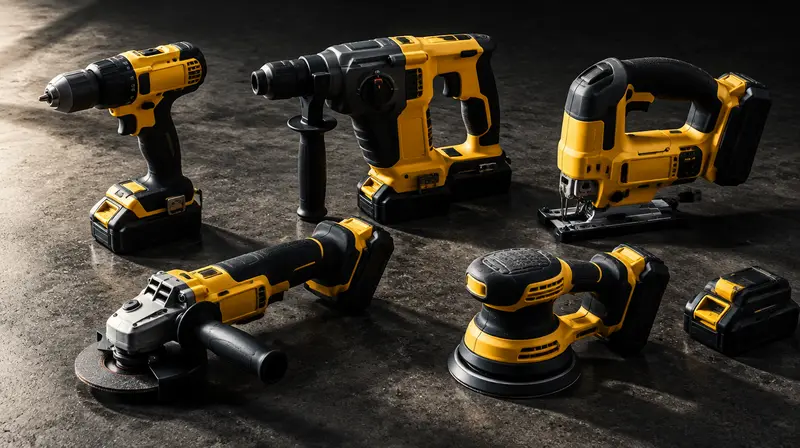
An impact driver looks like a stubby drill but works very differently. Instead of pushing constant torque, it delivers thousands of rotational hammer blows per minute. That lets it drive long screws and bolts with little effort and almost no wrist strain. Its big brother, the impact wrench, does the same for nuts and bolts on cars and machinery.
Quick answer
- Impact driver: 1/4" hex chuck, for screws, lag bolts and small nuts. Great second tool after a drill.
- Impact wrench: square drive (3/8" or 1/2"), for sockets, wheel nuts and large bolts.
- Use impact-rated bits and sockets only.
- Neither tool replaces a torque wrench for precise tightening.
How the impact mechanism works
Inside is a spring-loaded hammer and an anvil. When resistance builds, the hammer disengages, spins, and strikes the anvil, delivering a sharp rotational blow. This happens thousands of times per minute (IPM). Because the force comes in short bursts, very little twist is transferred back to your wrist, unlike a drill which tries to spin in your hand when a screw binds.
Impact driver
What it is good for
- Driving long wood screws, structural screws and lag bolts
- Decking, framing, fences, sheds
- Screwing into metal studs and self-drilling screws
- Small nuts and bolts with a hex-to-socket adapter
- Drilling with hex-shank bits (not as precise as a drill)
What it is not good for
- Small screws in furniture or soft materials (too much force; it has no clutch on most models)
- Precise drilling with round-shank bits
- Masonry drilling
Specs to look for
Multiple speed modes are important for beginners: a low mode prevents stripping and snapping smaller screws. Some models have a special mode for self-tapping screws.
Impact wrench
Sizes
| Drive size | Typical torque | Used for |
|---|---|---|
| 1/4" / 3/8" | 100–400 Nm | Small engine bolts, bikes, furniture bolts, machinery |
| 1/2" mid-torque | 400–800 Nm | Wheel nuts, suspension bolts; best all-rounder for car DIY |
| 1/2" high-torque | 1,000+ Nm | Seized bolts, trucks, agricultural machinery |
| 3/4" and 1" | 1,500+ Nm | Heavy trucks, industrial |
Manufacturers quote both tightening torque and "nut-busting" (breakaway) torque, which is higher. Compare like with like.
For car work, a 1/2" mid-torque cordless wrench is the sweet spot. Compare cordless and air options in our impact wrench comparison.
Impact-rated accessories
- Impact bits have a torsion zone that flexes to absorb shock. Normal bits snap quickly.
- Impact sockets are black (chrome-molybdenum steel) with thicker walls. Chrome hand-tool sockets are harder and more brittle and can shatter; never use them on an impact wrench.
- Hex-shank drill bits fit the impact driver's quick-release chuck.
How to use an impact driver
- Pull the collar forward, insert an impact bit, release.
- Select a low mode for small screws, higher for long screws.
- Press firmly in line with the screw. Start slowly until the screw bites.
- Squeeze the trigger; the impact action will begin automatically as resistance rises.
- Stop as soon as the screw head is flush. Impact drivers can quickly overdrive screws.
How to use an impact wrench on wheel nuts
- With the car on the ground, use the wrench in reverse to loosen nuts.
- Raise the car and support it on jack stands.
- When refitting, run nuts on by hand first to avoid cross-threading.
- Snug them lightly with the wrench on its lowest setting (or by hand).
- Lower the car and tighten to the specified torque with a torque wrench in a star pattern.
Using a full-power impact wrench to tighten wheel nuts can overtighten them, stretch studs and warp brake discs. Always finish with a torque wrench to the manufacturer's specification.
Frequently asked questions
Do I need an impact driver if I have a drill?
Not for basic home jobs. It becomes very useful for decking, framing, lots of long screws, or if you want to keep a drill bit in the drill and a driver bit in the driver.
Can an impact driver remove wheel nuts?
Powerful 18V models with a socket adapter can sometimes loosen wheel nuts, but an impact wrench is the right tool. Tighten with a torque wrench.
Why are impact drivers so loud?
The hammer mechanism striking the anvil is loud. Wear hearing protection for long sessions.
This guide is general information, not professional advice. Always read your tool's manual, use the right protective equipment and follow local building and electrical codes. See our disclaimer.