Beginners: Start Here
Power Tool Glossary: Torque, Nm, RPM, BPM, Brushless, SDS and More
Plain-English definitions of the specs and terms on every power tool box: torque and Nm, RPM, BPM and IPM, brushless motors, SDS-plus, chucks, bits and accessories.
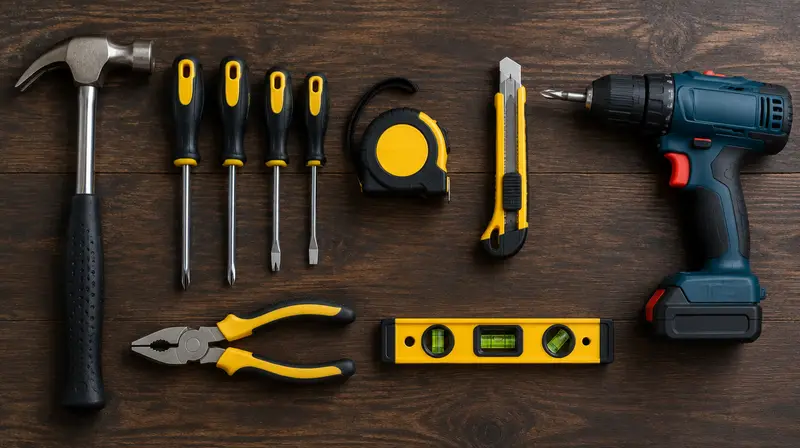
Tool boxes and product pages are covered in numbers and abbreviations. Once you know what they mean, comparing tools becomes much easier. This glossary explains the terms you will meet most often, in plain English, with a note on why each one matters.
The five numbers that matter most
- Torque (Nm or in-lbs): twisting force. Higher = drives bigger screws and bits.
- RPM: rotation speed. Higher = faster drilling in wood and metal with small bits.
- BPM / IPM: hammer blows or impacts per minute (hammer drills, impact drivers).
- Joules (J): impact energy of a rotary hammer's single blow. Higher = faster in concrete.
- V and Ah: battery voltage (power class) and capacity (runtime).
Power and performance
- Torque (Nm, in-lbs, ft-lbs)
- The rotational force a tool can apply, measured in newton-metres (Nm) or inch-pounds. 1 Nm is about 8.85 in-lbs. A compact drill might offer 30–45 Nm, a heavy-duty 18V drill 100–140 Nm, and an impact driver 150–250 Nm. Torque matters when driving long screws or turning large bits. Manufacturers measure it differently, so compare within a brand when possible.
- RPM (revolutions per minute) / no-load speed
- How fast the chuck or blade spins with no resistance. Drills have two gears: low speed (around 0–500 rpm) for driving screws and big bits, high speed (around 0–2,000 rpm) for drilling small holes.
- BPM (blows per minute)
- How many hammer blows a hammer drill or rotary hammer delivers per minute. Hammer drills have high BPM but small blows; rotary hammers have fewer but far more powerful blows.
- IPM (impacts per minute)
- The same idea for impact drivers and wrenches: how often the internal hammer strikes the anvil.
- Impact energy (joules, J)
- The energy of one blow of a rotary hammer, the best single indicator of how fast it drills concrete. Around 1.2–2.0 J for light SDS-plus tools, 2.5–4 J for heavy SDS-plus, 5 J and above for SDS-max.
- Watts (W)
- Power input for corded tools. Useful for comparing tools of the same type, but not the whole story: gearing and efficiency matter as much.
- Duty cycle
- How long a tool can work continuously before it needs to cool down. Pro tools are designed for longer duty cycles.
Motors and batteries
- Brushed motor
- A traditional motor using carbon brushes to deliver current to the spinning part. Cheaper, but the brushes wear out and cause friction and heat. Many corded tools still use them, and brushes can be replaced (see our maintenance guide).
- Brushless motor
- An electronically controlled motor without brushes. More efficient (more work per battery charge), cooler running, more compact and longer lasting. Worth paying extra for on cordless tools you use often.
- Volts (V)
- The battery platform's power class: 12V, 18V/20V MAX, 36V/40V and so on. See battery platforms explained.
- Amp-hours (Ah)
- Battery capacity, like the size of a fuel tank. 4.0 Ah runs about twice as long as 2.0 Ah.
- Bare tool / tool only
- A cordless tool sold without a battery or charger. Cheaper, for people who already own the platform.
- Kit
- Tool plus battery(ies), charger and often a case.
Chucks, bits and accessories
- Chuck
- The clamp at the front of a drill that holds the bit. Keyless chucks tighten by hand; keyed chucks use a small key. Common sizes are 10 mm (3/8 in) and 13 mm (1/2 in), the maximum shank diameter they accept.
- 1/4" hex
- The six-sided quick-release holder on impact drivers. It takes screwdriver bits and hex-shank drill bits only.
- SDS-plus
- A slotted bit shank system used on light and medium rotary hammers. The bit slides and locks in without tightening, and it can move back and forth for efficient hammering. Bits are 10 mm shank and typically up to about 26–30 mm diameter.
- SDS-max
- A larger shank for heavy rotary hammers and breakers (18 mm shank). Not interchangeable with SDS-plus.
- Bit
- Either a screwdriver bit (Phillips, Pozidriv, Torx, hex, flat) or a drill bit (wood, metal, masonry).
- PH, PZ, TX
- Phillips (PH), Pozidriv (PZ) and Torx (TX or T) screw heads. PH and PZ look similar but are different; using the wrong one causes cam-out and stripped heads. PZ is common on European screws.
- HSS
- High-speed steel, the standard material for metal-drilling bits. Cobalt (HSS-Co) bits are better for stainless steel.
- Carbide (TCT) tip
- Tungsten carbide cutting tips on masonry bits and saw blades. Much harder than steel.
- Accessories / consumables
- Discs, blades, sanding sheets, bits: everything that wears out. Budget for them; cheap consumables make any tool perform badly.
Tool functions and features
- Clutch
- The numbered ring on a drill-driver that limits torque. At a low number the chuck slips (clicks) at low force, which stops screws being overdriven. The drill symbol bypasses the clutch.
- Hammer mode
- On combi (hammer) drills, a setting that adds rapid vibration to help drill brick and block.
- Variable speed trigger
- Speed increases the harder you press. Start slowly for accuracy.
- Electronic brake
- Stops the blade or chuck quickly when you release the trigger. A safety feature on saws and grinders.
- Soft start
- Ramps up speed gradually to reduce the jolt when starting large grinders and saws.
- Kickback control / anti-kickback
- Electronics that detect a sudden bind and cut power, found on grinders and some rotary hammers and saws.
- No-volt release
- A feature that prevents a tool from restarting automatically after a power cut if the switch was left on.
- Orbital action / pendulum
- On jigsaws, a setting that moves the blade forward on the upstroke for faster, rougher cuts.
- OPM
- Orbits (or oscillations) per minute on sanders and multi-tools.
Unit conversions you will need
| From | To | Multiply by |
|---|---|---|
| Nm | in-lbs | 8.85 |
| Nm | ft-lbs | 0.738 |
| ft-lbs | Nm | 1.356 |
| mm | inches | 0.0394 (25.4 mm = 1 in) |
Frequently asked questions
How much torque do I need in a drill?
For furniture and shelves, 30–50 Nm is plenty. For general DIY, 50–80 Nm. For large holes and long screws, 90 Nm and above.
Is a brushless drill worth it?
For tools you use often, yes: more runtime per charge, more power for the size and a longer life. For a tool used twice a year, a brushed model is fine.
Can SDS-plus bits be used in a normal drill?
Not directly. SDS bits need an SDS chuck. Some rotary hammers can take a standard chuck adapter, but not the other way round.
This guide is general information, not professional advice. Always read your tool's manual, use the right protective equipment and follow local building and electrical codes. See our disclaimer.